An Introduction to Machine Learning Datasets and Best Resources

Machine Learning datasets

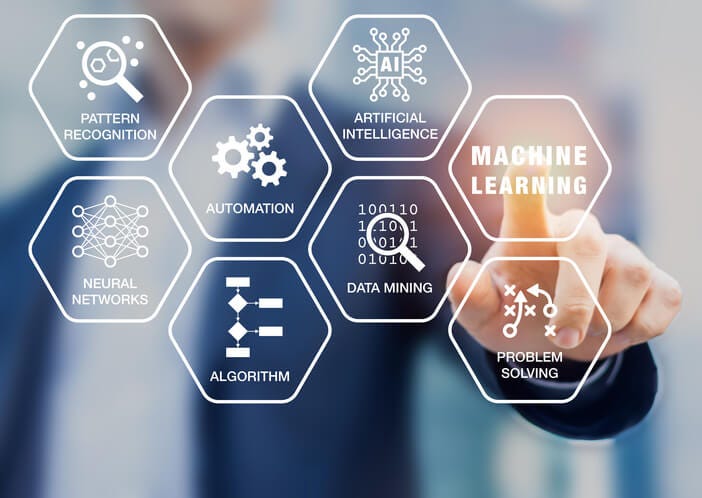
AI is perhaps of the most sizzling point in tech. The idea has been around for quite a long time, yet the discussion is warming up now because of its utilization in everything from web searches and email spam channels to suggestion motors and self-driving vehicles. AI preparing is a cycle by which one trains … Read more

Where can I get machine learning datasets for Best AI Projects?

data labelling at 24x7offshoring

With regards to information, there are a wide range of sources that you can use for your machine learning dataset. The most widely recognized wellsprings of information are the web and computer based intelligence created information. In any case, different sources incorporate datasets from public and confidential associations or individual lovers who gather and offer … Read more

How will best you address issues related to participant consent in data collection?

gettyimages 184386573 612x612 2

How will best you address issues related to participant consent in data collection?

data collection

Data Collection

Data collection is the process of collecting and measuring information on established variables in a systematic way, which allows obtaining relevant answers, testing hypotheses and evaluating results. Data collection in the research process is common to all fields of study. While methods vary by discipline, the emphasis is on ensuring accurate and reliable collection.

In the IT field, the goal of all data collection is to capture quality evidence that is then translated into analysis and answers to business questions.

How can we ensure that participants are truly informed when they consent to participate in remote data collection activities?

Obtaining informed consent is just as important in remote data collection as in any other form of data collection. However, given the limitations regarding the length of a telephone call and the difficulties of understanding long and complex texts read over the telephone, a simplified and less detailed informed consent process could be considered.

However, the informed consent process should be considered an iterative and ongoing process. It may not be necessary to obtain consent again at each stage of data collection (and doing so may not be applicable in, for example, a one-off telephone interview). However, to help participants understand, they should be given information throughout the data collection process and ensured that they know that they can withdraw consent at any stage of the process. This point may be particularly important when new information becomes available that could impact the risks or benefits of data collection.

participants are truly informed

Before obtaining consent over the phone, it is necessary to confirm that one is speaking to the correct person. There should be a protocol that indicates how to proceed if the person answering the phone is not the right person. For example, if someone else answers the phone:

Ask the person who answered if they know the person in question and if you can contact this person through this number or if they have the correct number to reach them.

    • If the person answering does not know the person in question, apologize for the inconvenience caused and end the call.

    Informed consent should use a standardized participant information sheet and, at a minimum, should describe the following (adapted from this resource ):

    • Who you are (the data collector) and what organization you work for (reiterate the information, even if you mentioned it at the beginning of the call).

    • Why is this data being collected, that is, what is the overall objective of data collection.

    • Why was that person selected; For example, explain whether the selection was random or whether the person was chosen because they belong to a particular group of interest (e.g., people over 60).

    • That participation is voluntary and that choosing not to participate will have no consequences for the person or their family. Clearly detail what participants have to do to refuse or stop participating (e.g., tell them they can say something like, “I don’t want to continue the conversation”).

      Remind respondents once again before asking for consent that they are free to refuse to participate, and at different stages of data collection, remind them that they are free to withdraw their consent. Also mention that once the respondent’s data has been anonymized and combined, they cannot be excluded.

    • The number of participants about whom data will be collected.

    • What the respondent is expected to do if they decide to participate, including the expected duration of participation.

    • Any reasonably foreseeable risk or inconvenience to the respondent in connection with his or her participation in data collection.

    • Any benefits that the respondent could receive from their participation.

    • How the data collected will be used and who will have access to it.

    • How the confidentiality and privacy of respondents will be guaranteed.

    • Who should the respondent contact if they have questions and give them appropriate contact details.

    • Who should the respondent contact if they have a problem or complaint in relation to data collection and give them relevant contact details.

    These points should be described in simple terms in a language that the participant is fluent in and comfortable with. As mentioned above, it is important to inform the respondent how long the survey or interview will take. This will reduce the incidence of cases where the respondent must end the interview early because he has other priorities in his life or because he is running out of battery.

    Once these issues have been explained, the data collector should ask for verbal consent from the participant and record it explicitly. Verbal consent should be obtained by asking the participant to say “Yes, I agree to participate” in response to the following prompts:

    • I confirm that I have understood the information about the study called “[insert study name here]”. I had the opportunity to evaluate the information, ask questions and obtain satisfactory answers. Do you agree to participate?

    • I understand that my consent is voluntary and that I am free to withdraw such consent, without giving any reason and without consequences for me, until such time as the data is anonymized or combined and cannot be excluded. Do you agree to participate?

    • I understand that all project data may be shared publicly, but that I cannot be identified from this information (if applicable). Do you agree to participate?

    When collecting data over the phone, it is important to remember that other family members are likely to hear what the conversation participant is saying, particularly in cases where physical distancing measures have been imposed and people are encouraged to stay in their home. home. Therefore, we recommend being aware of this issue during remote data collection and avoiding topics that could be related to stigma or that could put the participant at risk if others learn of the information.

    Some examples of topics of this type: mental health, domestic violence, sanitation habits and menstrual hygiene management. If questions about sensitive topics will be asked, we recommend first checking that the person is alone and asking them if it is okay to ask them questions related to the study (yes/no answers). This can avoid causing unintentional harm and can give the person an easy way to refuse to participate if they feel they are at risk. If absolutely necessary, questions of this type can be answered with simple multiple choice answers (eg, a scale of 0 to 10).

    Interviewers should also verify with respondents that they are the only ones who can hear what was said during the phone call and should also provide options to skip questions if they perceive respondents to be uncomfortable.

    Interviewers


    If people are refusing to participate, you may want to know why they are refusing, so you can address this issue directly or communicate it and use it to improve future processes. This should be done with great care: the data collector should emphasize that mentioning the reason is optional and is in no way intended to pressure the person to participate.

    If you ask for this information, remember that using a closed-ended (yes/no) question may be easier for the person to answer if it is a sensitive topic and there may be other people listening on the other side. If the person refuses to give a reason, thank them for their time, record the refusal to participate and the reason, reassure the person that there will be no consequences for refusing, and then end the interview.

    Why is data collection so important?

    Collecting customer data is key to almost any marketing strategy. Without data, you are marketing blindly, simply hoping to reach your target audience. Many companies collect data digitally, but don’t know how to leverage what they have.

    Data collection allows you to store and analyze important information about current and potential customers. Collecting this information can also save businesses money by creating a customer database for future marketing and retargeting efforts. A “wide net” is no longer necessary to reach potential consumers within the target audience. We can focus marketing efforts and invest in those with the highest probability of sale.

    Unlike in-person data collection, digital data collection allows for much larger samples and improves data reliability. It costs less and is faster than in-person data, and eliminates any potential bias or human error from the data collected.


Have you considered the worst possible biases in your data collection process?

gettyimages 1374779958 612x612 1

Have you considered the worst potential biases in your data collection process?


data collection

Data collection

Data collection es very important. Is   the  process  of collecting and measuring information on established variables in a systematic way, which allows obtaining relevant answers, testing hypotheses and evaluating results. Data collection in   the  research process  is common to all fields of study.

Research bias

Data collection process is very important. In a purely objective world, bias in research would not exist because knowledge would be a fixed and immovable resource; Either you know about a specific concept or phenomenon, or you don’t know. However, both qualitative research and the social sciences recognize that subjectivity and bias exist in all aspects of the social world, which naturally includes the research process as well. This bias manifests itself in the different ways in which knowledge is understood, constructed and negotiated, both within and outside of research.

Research bias


Understanding research bias has profound implications for data collection and analysis methods, as it requires researchers to pay close attention to how to account for the insights generated from their data.

What is research bias?

Research bias, often unavoidable, is a systematic error that can be introduced at any stage of the research process, biasing our understanding and interpretation of the results. From data collection to analysis, interpretation, and even publication, bias can distort the truth we aim to capture and communicate in our research.

It is also important to distinguish between bias and subjectivity, especially in qualitative research. Most qualitative methodologies are based on epistemological and ontological assumptions that there is no fixed or objective world “out there” that can be measured and understood empirically through research.

In contrast, many qualitative researchers accept the socially constructed nature of our reality and therefore recognize that all data is produced within a particular context by participants with their own perspectives and interpretations. Furthermore, the researcher’s own subjective experiences inevitably determine the meaning he or she gives to the data.

These subjectivities are considered strengths, not limitations, of qualitative research approaches, because they open new avenues for the generation of knowledge. That is why reflexivity is so important in qualitative research. On the other hand, when we talk about bias in this guide, we are referring to systematic errors that can negatively affect the research process, but that can be mitigated through careful effort on the part of researchers.

To fully understand what bias is in research, it is essential to understand the dual nature of bias. Bias is not inherently bad. It is simply a tendency, inclination or prejudice for or against something. In our daily lives, we are subject to countless biases, many of which are unconscious. They help us navigate the world, make quick decisions, and understand complex situations. But when we investigate, these same biases can cause major problems.

Bias in research can affect the validity and credibility of research results and lead to erroneous conclusions. It may arise from the subconscious preferences of the researcher or from the methodological design of the study itself. For example, if a researcher unconsciously favors a particular study outcome, this preference could affect how he or she interprets the results, leading to a type of bias known as confirmation bias.

Research bias can also arise due to the characteristics of the study participants. If the researcher selectively recruits participants who are more likely to produce the desired results, selection bias may occur.

Another form of bias can arise from data collection methods. If a survey question is phrased in a way that encourages a particular response, response bias can be introduced. Additionally, inappropriate survey questions can have a detrimental effect on future research if the general population considers those studies to be biased toward certain outcomes based on the researcher’s preferences.

What is an example of bias in research?

Bias can appear in many ways. An example is confirmation bias, in which the researcher has a preconceived explanation for what is happening in his or her data and (unconsciously) ignores any evidence that does not confirm it. For example, a researcher conducting a study on daily exercise habits might be inclined to conclude that meditation practices lead to greater commitment to exercise because she has personally experienced these benefits. However, conducting rigorous research involves systematically evaluating all the data and verifying one’s conclusions by checking both supporting and disconfirming evidence.

example of bias in research


What is a common bias in research?

Confirmation bias is one of the most common forms of bias in research. It occurs when researchers unconsciously focus on data that supports their ideas while ignoring or undervaluing data that contradicts them. This bias can lead researchers to erroneously confirm their theories, despite insufficient or contradictory evidence.

What are the different types of bias?

There are several types of bias in research, each of which presents unique challenges. Some of the most common are

– Confirmation bias:  As already mentioned, it occurs when a researcher focuses on evidence that supports his or her theory and ignores evidence that contradicts it.

– Selection bias:  Occurs when the researcher’s method of choosing participants biases the sample in a certain direction.

– Response bias:  Occurs when participants in a study respond inaccurately or falsely, often due to misleading or poorly formulated questions.

– Observer bias (or researcher bias):  Occurs when the researcher unintentionally influences the results due to their expectations or preferences.

– Publication bias:  This type of bias arises when studies with positive results are more likely to be published, while studies with negative or null results are usually ignored.

– Analysis bias:  This type of bias occurs when data is manipulated or analyzed in a way that leads to a certain result, whether intentionally or unintentionally.

different types

What is an example of researcher bias?

Researcher bias, also known as observer bias, can occur when a researcher’s personal expectations or beliefs influence the results of a study. For example, if a researcher believes that a certain therapy is effective, she may unconsciously interpret ambiguous results in ways that support the therapy’s effectiveness, even though the evidence is not strong enough.

Not even quantitative research methodologies are immune to researcher bias. Market research surveys or clinical trial research, for example, may encounter bias when the researcher chooses a particular population or methodology to achieve a specific research result. Questions in customer opinion surveys whose data are used in quantitative analysis may be structured in such a way as to bias respondents toward certain desired responses.

How to avoid bias in research?

Although it is almost impossible to completely eliminate bias in research, it is crucial to mitigate its impact to the extent possible. By employing thoughtful strategies in each phase of research, we can strive for rigor and transparency, improving the quality of our conclusions. This section will delve into specific strategies to avoid bias.

How do you know if the research is biased?

Determining whether research is biased involves a careful review of the research design, data collection, analysis, and interpretation. You may need to critically reflect on your own biases and expectations and how they may have influenced your research. External peer reviews can also be useful in detecting potential bias.

Mitigate bias in data analysis

During data analysis, it is essential to maintain a high level of rigor. This may involve the use of systematic coding schemes in qualitative research or appropriate statistical tests in quantitative research. Periodically questioning interpretations and considering alternative explanations can help reduce bias. Peer debriefing, in which analysis and interpretations are discussed with colleagues, can also be a valuable strategy.

By using these strategies, researchers can significantly reduce the impact of bias in their research, improving the quality and credibility of their findings and contributing to a more robust and meaningful body of knowledge.

Impact of cultural bias in research

Cultural bias is the tendency to interpret and judge phenomena according to criteria inherent to one’s own culture. Given the increasingly multicultural and global nature of research, understanding and addressing cultural bias is paramount. This section will explore the concept of cultural bias, its implications for research, and strategies to mitigate it.

Bias and subjectivity in research

Keep in mind that bias is a force to be mitigated, not a phenomenon that can be completely eliminated, and each person’s subjectivities are what make our world so complex and interesting. As things continually change and adapt, research knowledge is also continually updated as we develop our understanding of the world around us.

Why is data collection so important?

Collecting customer data is key to almost any marketing strategy. Without data, you are marketing blindly, simply hoping to reach your target audience. Many companies collect data digitally, but don’t know how to leverage what they have.

Data collection allows you to store and analyze important information about current and potential customers. Collecting this information can also save businesses money by creating a customer database for future marketing and retargeting efforts. A “wide net” is no longer necessary to reach potential consumers within the target audience. We can focus marketing efforts and invest in those with the highest probability of sale.

Unlike in-person data collection, digital data collection allows for much larger samples and improves data reliability. It costs less and is faster than in-person data, and eliminates any potential bias or human error from the data collected.

data collection

How to Use ChatGPT to Create a Best Dataset: Everything You Need to Know

Machine-Learning Datasets

A dataset contains related data values that are collected or measured as part of a cohort study to track participants over time. For example, laboratory tests run at a series of appointments would yield many rows per participant, but only one for each participant at each time. A dataset’s properties include identifiers, keys, and categorizations for the data. … Read more

How do people create the Best datasets?

Public Datasets

Machine Learning (ML) has impacted a different scope of utilizations. This has been conceivable mostly because of the better-registering power and a lot of preparing information. I can’t stress sufficiently the significance of preparing information in ML frameworks. Truth be told, the greater part of the AI models’ concerns aren’t brought about by the models … Read more

Code-Switching: An Best Exploration of Hindi-English Transaction in Multilingual Communication

hindi

Introduction: Language Hindi is a dynamic and versatile tool that facilitates communication, reflecting the rich tapestry of cultures and societies. In multilingual environments, individuals often engage in a phenomenon known as code-switching, where they seamlessly transition between two or more languages within a single conversation. This linguistic practice is particularly prevalent in regions like India, … Read more

The Transformative Power of AI Translation: Breaking Barriers and Bridging Cultures

hindi

Introduction: Artificial Intelligence (AI) translation stands at the forefront of technological advancements, revolutionizing the way we communicate across linguistic boundaries. In just a short span of time, AI translation has evolved from rudimentary language conversion tools to sophisticated systems capable of nuanced understanding and contextual interpretation. This transformative power extends far beyond mere language conversion, … Read more

30 Best Free Datasets for Machine Learning Projects

hindi

We have listed some quality datasets for machine learning projects. You can refer to these datasets based on your project requirements and access them for free. Labelme – Data labeling for computer vision. Labelme is a large dataset of annotated images. It allows you to control your data labeling accuracy and generate high-quality training data. ImageNet – The de facto image … Read more

Importance of Datasets in Machine Learning and AI Research

Machine learning

The majority of us these days are centered around building machine learning models and taking care of issues with the current datasets. However, we want to initially comprehend what a dataset is, its significance, and its part in building powerful AI arrangements. Today we have an overflow of open-source datasets to do explore on or … Read more