Best Kw’adza Language

abcdhe 677

 Kw’adza language is a minority language spoken by the Kw’adza people, who are an indigenous community living in a remote region of the world. The language has a rich history and cultural significance to the Kw’adza people, as it is an integral part of their identity and heritage. However, like many minority languages, Kw’adza is … Read more

Navigating the Tapestry of Cultures: The Best Art of Cultural Sensitivity in Translation

Cultural

Introduction: Translation is more than the mechanical Cultural conversion of words from one language to another; it is a delicate dance across the diverse tapestry of cultures. Within this intricate choreography, cultural sensitivity emerges as a critical element, ensuring that the essence of a message is not lost in linguistic translation. In this exploration, we … Read more

The Fascinating World of Translation: 10 Amazing Facts to Spark Your Curiosity

translation

Introduction: Translation is an intricate and essential aspect of human communication, enabling people from different linguistic backgrounds to connect and share ideas. Beyond its apparent role, translation harbors a wealth of fascinating facts that unveil its complexity and importance in our globalized world. In this exploration, we delve into 10 amazing facts about translation that … Read more

FREE English to Gujarati translate software

android chica cara futura inteligencia artificial ai generativa 372999 13064

FREE English to Gujarati translate software

translate

Translate

 Translate is the  action and effect of translating  (expressing in one  language  something that has been previously expressed or that is written in a different language). The term can refer both to the interpretation given to a  text  or  speech  and to the material work of the translator.

This concept has its etymological origin in Latin. Specifically, we can determine that it comes from the word  tradition , which can be defined as the action of guiding from one place to another. And it is made up of three different parts: the prefix  trans -, which is synonymous with  “from one side to the other” ; the verb  ducere , which means  “to guide” ; and the suffix – cion , which is equivalent to  “action” .

For example:  “The Argentine writer Jorge Luis Borges made translations of works by Edgar Allan Poe, Walt Whitman, George Bernard Shaw and other great authors” ,  “The translation of this film is very bad” ,  “The speaker speaks too fast, I think that the translate is not including all its concepts . ”

Types of translate

The types of translate are various. Direct translation is   carried out from a foreign language to the language of the translator (such as the case of Borges translating a text by Poe). Reverse translation ,  on the other hand, takes the form of the translator’s language into a foreign language.

On the other hand, one can speak of literal translation  (when the original text is followed word by word) or  free or literary translation  (the meaning of the original text is respected, although without following the author’s choice of expressions).

However, we cannot ignore that there is another classification of translation. In this case, within it we find categories such as  judicial translation , which is that which takes place in front of a court.

On the other hand, there is  literary translation  which, as its name indicates, is the one whose object is literary works of various kinds, be they stories, poems, theater or novels. All of this without forgetting what is known as  informative translation,  which is responsible for doing the same with all types of texts and documents that aim to make known a matter in question.

The difficulties that students who begin their translation courses have when they first face the task of producing a TT from a TO are varied, but in general terms they are related to an exaggerated concentration on linguistic aspects and a lack of of attention to the discursive or communicative aspects of the situation of enunciation, origin and end of the translation.

It is the teacher’s task, as  Gile  (1995: 21) points out, to emphasize from the beginning the fact that translation has a communicative function and that only with this in mind is it possible to successfully approach the learning of  translation techniques .

Need to translation your PDF to Gujarati?

Do you want to translation your PDF file into Gujarati? Look no further! These are the top 5 options to consider:

  1. DocTranslator.com  – This website offers superior AI that can OCR images and translate them while preserving the original formatting and layout. It can handle PDF files up to 1 Gb in size and up to 5000 pages. It is the best option for you.
  2. Google Translator  – This online tool can handle small PDF files and is free to use, but it may not preserve formatting and layout as well as DocTranslator.
  3. Adobe Acrobat  – This software allows you to translate PDF files, but it can be expensive and may not offer the same level of accuracy as DocTranslator.
  4. SDL Trados  – This professional translation software can handle large PDF files. However, it can be
    expensive and may not preserve formatting as well as DocTranslator.
  5. Microsoft Translator  – This online tool can handle small PDF files and is free to use, but it may not preserve formatting and layout as well as DocTranslator.

Gujarati

The best machine translation software you can try in 2023

When it comes to translating texts, companies now have a credible alternative to hiring a human translator: the use of machine translation software.

Machine translation software (known as MT software) is an artificial intelligence-based tool that provides automatic translations of text between different languages, such as from English to Spanish or vice versa. Although machine translation programs were not the most accurate when they were first developed, technological improvements introduced over the decades have meant that they can now do a fairly accurate job.

For this reason, this category of software is usually integrated into computer-assisted translation (CAT) tools and used by companies participating in international projects. For example, international companies that want to localize their web pages can use machine translation programs to translate large amounts of text on a large scale.

However, machine translation software is not only used to translate web pages. You can also translate contractual documents and other collateral documents necessary to successfully maintain international business relationships, and the economic advantages of investing in translation are evident: according to a study by Common Sense Advisory (now known as CSA Research), Fortune 500 companies that The more they spent on translation were 1.5 times more likely to see an increase in their total income than those who did not.

Why is it important to translation web pages

There’s a reason why some of the biggest companies in the market prioritize translation: it’s profitable. Consumers are 73% more likely to purchase something from a website in their native language. Microsoft, for example, has translated its products into more than 90 languages, Toshiba to more than 30, and Apple to 40.

In the long term, translating your website will not only increase sales rates but will also improve your SEO. As we just said, more than half of Google searches are not done in English, so how are you going to outperform your international competitors if you don’t create content in the native language of your target audience?

The answer: You can’t. That’s why an easy-to-use solution like Weglot is crucial to localize your site to reach a wider audience and improve multilingual SEO.

Not only that, but your non-English speaking visitors are more likely to interact with your website if they read the content in their native language. More than 56% of consumers say the ability to get information in their own language is more important than price. Although most modern browsers include the functionality to integrate with the most common online translators, native speakers will feel much more comfortable knowing that a website has been  originally  served to them in their own language, rather than having to translate the text from a foreign language manually using your own translation applications.

Take the example of  Ron Dorff  . This Swedish and French clothing retailer uses Weglot to translation more than 150 products into three new languages, and since using the solution, the site has increased traffic by more than 400% in its first year of using Weglot alone .  If Ron Dorff achieved these results, there is no reason you can’t enjoy similar results too!

website

Evolution of machine translation to 2023 (and beyond)

The first machine translation programs, which emerged in the 1970s, used rule-based machine translation (RBMT). This technology translated the text word by word using a set of grammatical rules and the dictionary of the corresponding language pair. However, it often resulted in stilted translations that were not always the most readable, let alone the easiest to use.

As a result, machine translation gained a bad reputation almost from the beginning. Unimpressed by the poor accuracy of machine-translated texts, people began to consider them inferior to “real” (i.e. human) translators.

From rule-based machine translation to statistical machine translation

Fortunately for machine translation providers, machine translation lost its negative image as the technology evolved. Following RBMT came statistical machine translation (SMT), which translates texts by analyzing existing human translations, known as bilingual text corpora, and then applying prediction algorithms to determine the best way to translate a text in any situation.

SMT was a big improvement over RBMT, but its accuracy was still poor at times. However, the development did not stop there. Today, the latest and greatest machine translation technology available is neural machine translation (NMT), which uses complex deep learning models to translation  text.

Enter Neural Machine Translation

Neural machine translation (NMT) is capable of generating high-quality translations with the help of sophisticated language translation algorithms. These translations are not only more accurate, but also sound more natural than translations produced by RMBT and SMT technologies.

Today, the effectiveness of machine translation has silenced most of the opposition to machine translation. Even objections like “But machine translation can’t capture and translate text in images and PowerPoint slides!” have been largely silenced by the development of advanced machine translation tools that can do just that.

Should you use a machine translation program for your company?

Machine translation has already achieved general acceptance in the market, being a lifesaver for international companies that need to obtain always accurate translations in the most efficient way possible. Even professional translators adopt machine translation technology to streamline and accelerate the translation process.

Because? Here are some of the advantages of machine translation software that your business can also benefit from:

  • Easy to use:  The machine translation software is so easy to use that you won’t need technical knowledge to use it like a professional. Turn on the software or platform, copy and paste the source text and set the target language to get the text translated in real time.
  • Faster results:  As mentioned in the previous point, machine translation programs can translate a text in a matter of seconds. In contrast, human translation can take hours, or even days, depending on the volume of text that needs to be translated.
  • Reliable:  Although the accuracy of translations produced by different machine translation programs can vary, these translations are generally reliable. This is because this type of software is usually reviewed by expert translators and native speakers before publication.
  • Great value for money:  Investing in machine translation software is undoubtedly much  cheaper  than hiring a professional translator, especially if you want to translate rare language pairs or need translations within a short turnaround time.
  • Seamless operation:  Some machine translation programs can integrate with other platforms to facilitate translation workflows. There is no need to copy and paste text between the software and the platform.

The 5 best automatic translation software options on the market

At the moment, there is no single machine translation software that can perfectly meet all needs and use cases. Each software has its pros and cons and may be better suited to meet certain language translation goals, content formats, and target audiences than others.

Here are 5 of the best machine translation software options on the market and how their technological features influence the quality of your translations:

1. Google Translate

Google Translate  needs no introduction, as it is probably the best-known machine translation program. Launched in 2006, the translation tool previously used SMT to produce word-for-word translations. Since then, however, Google has abandoned SMT in favor of the more precise NMT, resulting in increasingly better translation quality. Called Google Neural Machine Translation (GNMT), Google’s proprietary machine translation technology uses recurrent neural networks to translate entire sentences while preserving their context as much as possible.

2. DeepL Translator

DeepL Translator  is an NMT service developed by Linguee GmbH (now known as DeepL GmbH), a German company focused on the development of machine translation technology through deep learning. DeepL Translator was launched in 2017 and exhaustively studies and learns the best translation options from reliable linguistic sources. Thanks to its use of artificial intelligence, DeepL Translator can deliver more accurate and nuanced translations compared to its peers. He may actually live up to his own claim to be “the most accurate translator in the world.”

3. Bing Microsoft Translator

Bing Microsoft Translator  is based on Microsoft’s own automatic translation system that uses the latest NMT technology. Like most machine translation software developers, Microsoft has focused its research efforts on delivering smarter machine translations that conform to natural language usage. For example, Bing Microsoft Translator uses an attention algorithm to analyze the order in which words should be translated to get the most accurate translation results.

4. SYSTRAN Translate

SYSTRAN has a long history. It was founded in 1968 and is possibly the first company in history to offer commercial machine translation services. And this pioneer in the field has not rested on its laurels: this machine translation provider regularly updates its SYSTRAN Translate machine translation solution   with cutting-edge machine translation technology and features. For example, SYSTRAN’s latest Pure Neural Machine Translation (PNMT) engine models the entire machine translation process using an artificial neural network for highly accurate translations.

5. Amazon Translate

For those in the know, Amazon is not only a leading e-commerce marketplace: it also provides machine translation through its  Amazon Translation service  by Amazon. According to the Amazon Translate website, this NMT service was created to provide fast, high-quality, and customizable language translations at an affordable price. Amazon constantly improves its data sets to provide the best possible translations regardless of the length of the source text. At the same time, Amazon Translate’s active custom translation feature allows users to import their own translation data to customize translations to their preferences.

Leverage machine translation software for your localization projects today with Weglot

With machine translation technology constantly improving over time, machine translation software has become a solid option for businesses that need to translate. If you are looking for a machine translation service, it is best to try several translation tools and evaluate whether they suit the specific needs of your company before making a financial commitment.

Also, keep in mind that machine translation software is not intended to completely replace human translation. Once you have completed your first round of translation with TA, you may want to have a professional translator review and fine-tune the translation to ensure it is fit for purpose.

Although the machine translation software options mentioned above can translate texts decently, website translation requires a better and more elaborate approach. Using a website translation solution that combines the speed of machine translation with direct integration with your website platform ensures accuracy and efficiency, as you don’t have to waste time copying and pasting translated texts from a side to side. And of course, a good website translation software will also display the translated content of your website.

Weglot is the perfect solution to provide a first layer of machine translation in website translation projects. It uses the best of leading machine translation programs such as DeepL Translator, Microsoft Translator and Google Translate to effortlessly translate your website with a high degree of accuracy thanks to the post-editing features available in your Weglot control panel.

Weglot integrates with WordPress, Shopify, Webflow and all other popular website platforms (and custom websites) to translate your website content and display these translations on your website, giving you the complete package when it comes to website translation.

It’s also designed for team collaboration between your colleagues and professional translators, allowing you to have expert eyes and edits on your translations before you distribute them.

Installing Weglot on your WordPress website

Now that we have explained why Weglot is the best website translation software, here is how you can install it on your website.

Once you are logged in to your WordPress dashboard, head to the WordPress plugin directory, search for Weglot in the search bar and install it.

Press activate.

Now, enter the API key provided by Weglot (to find it, you will have to log in to your Weglot account).

Once you’ve entered the API key, enter the target language (also known as the target language). If you’re just trying out Weglot to try it out, you only have access to one language, for one site, where you can translate up to 2000 words. If you want more, you can upgrade your plan from the Weglot control panel.

Instead of relying on a single machine translation solution, Weglot combines your chosen language pair with the best service available for the job, including Google Translate, DeepL, and Microsoft Translate. So whether you translate between Dutch and German, Italian and Arabic, or Russian and Portuguese, you can be sure that your first layer of machine-translated text will always be the highest quality translation available.

Choose how your language buttons will appear on your website. You can customize these options and decide if you want them with or without flags. The translation button can appear in the menu of your website, so customers can easily switch languages. You can also place language translation options in the sidebar or bottom right corner of your website. Save your changes and continue.

You can now see the language buttons on your website. Click on the menu to see which languages ​​you can translate your website into. Weglot will translate your site in seconds, including content controlled by its widgets. If you want to make corrections to the translation, go to the Weglot control panel.

As you can see in the example screenshot, visitors can toggle between English and Spanish using the menu in the bottom right corner.

View each string and edit your translations. You can override Weglot’s automatic translations and save your changes. Weglot displays all the text on your website, organized by languages ​​and web pages. You can also see your translated images and meta tags. From here, you can also invite collaborators to work from your Weglot dashboard to update and optimize translations.

The future is multilingual: why machine translation software is your passport to international success

Machine translation software has evolved enormously, moving from rudimentary rule-based systems to sophisticated neural machine translation models. This technological leap makes it an invaluable tool for companies seeking to scale internationally, efficiently and affordably.

Although there is no one-size-fits-all solution, Weglot offers a high-quality integrated translation service that combines the best of machine translation programs such as DeepL, Microsoft Translator and Google Translate. With easy installation and team collaboration features, Weglot simplifies website translation without compromising quality.

With its unique combination of the authority of professional translation and the speed and reliability of machine translation, all easily managed through your Weglot control panel, you will be assured of providing a high-quality localization service and improving your customers’ experience with the Weglot online translation platform.


FREE English to Gujarati translate software

man 845847 1280

FREE English to Gujarati translate software

translate

Translate

 Translate is the  action and effect of translating  (expressing in one  language  something that has been previously expressed or that is written in a different language). The term can refer both to the interpretation given to a  text  or  speech  and to the material work of the translator.

This concept has its etymological origin in Latin. Specifically, we can determine that it comes from the word  tradition , which can be defined as the action of guiding from one place to another. And it is made up of three different parts: the prefix  trans -, which is synonymous with  “from one side to the other” ; the verb  ducere , which means  “to guide” ; and the suffix – cion , which is equivalent to  “action” .

For example:  “The Argentine writer Jorge Luis Borges made translations of works by Edgar Allan Poe, Walt Whitman, George Bernard Shaw and other great authors” ,  “The translation of this film is very bad” ,  “The speaker speaks too fast, I think that the translate is not including all its concepts . ”

Types of translate

The types of translate are various. Direct translation is   carried out from a foreign language to the language of the translator (such as the case of Borges translating a text by Poe). Reverse translation ,  on the other hand, takes the form of the translator’s language into a foreign language.

On the other hand, one can speak of literal translation  (when the original text is followed word by word) or  free or literary translation  (the meaning of the original text is respected, although without following the author’s choice of expressions).

However, we cannot ignore that there is another classification of translation. In this case, within it we find categories such as  judicial translation , which is that which takes place in front of a court.

On the other hand, there is  literary translation  which, as its name indicates, is the one whose object is literary works of various kinds, be they stories, poems, theater or novels. All of this without forgetting what is known as  informative translation,  which is responsible for doing the same with all types of texts and documents that aim to make known a matter in question.

The difficulties that students who begin their translation courses have when they first face the task of producing a TT from a TO are varied, but in general terms they are related to an exaggerated concentration on linguistic aspects and a lack of of attention to the discursive or communicative aspects of the situation of enunciation, origin and end of the translation.

It is the teacher’s task, as  Gile  (1995: 21) points out, to emphasize from the beginning the fact that translation has a communicative function and that only with this in mind is it possible to successfully approach the learning of  translation techniques .

Need to translation your PDF to Gujarati?

Do you want to translation your PDF file into Gujarati? Look no further! These are the top 5 options to consider:

  1. DocTranslator.com  – This website offers superior AI that can OCR images and translate them while preserving the original formatting and layout. It can handle PDF files up to 1 Gb in size and up to 5000 pages. It is the best option for you.
  2. Google Translator  – This online tool can handle small PDF files and is free to use, but it may not preserve formatting and layout as well as DocTranslator.
  3. Adobe Acrobat  – This software allows you to translate PDF files, but it can be expensive and may not offer the same level of accuracy as DocTranslator.
  4. SDL Trados  – This professional translation software can handle large PDF files. However, it can be
    expensive and may not preserve formatting as well as DocTranslator.
  5. Microsoft Translator  – This online tool can handle small PDF files and is free to use, but it may not preserve formatting and layout as well as DocTranslator.

Gujarati

The best machine translation software you can try in 2023

When it comes to translating texts, companies now have a credible alternative to hiring a human translator: the use of machine translation software.

Machine translation software (known as MT software) is an artificial intelligence-based tool that provides automatic translations of text between different languages, such as from English to Spanish or vice versa. Although machine translation programs were not the most accurate when they were first developed, technological improvements introduced over the decades have meant that they can now do a fairly accurate job.

For this reason, this category of software is usually integrated into computer-assisted translation (CAT) tools and used by companies participating in international projects. For example, international companies that want to localize their web pages can use machine translation programs to translate large amounts of text on a large scale.

However, machine translation software is not only used to translate web pages. You can also translate contractual documents and other collateral documents necessary to successfully maintain international business relationships, and the economic advantages of investing in translation are evident: according to a study by Common Sense Advisory (now known as CSA Research), Fortune 500 companies that The more they spent on translation were 1.5 times more likely to see an increase in their total income than those who did not.

Why is it important to translation web pages

There’s a reason why some of the biggest companies in the market prioritize translation: it’s profitable. Consumers are 73% more likely to purchase something from a website in their native language. Microsoft, for example, has translated its products into more than 90 languages, Toshiba to more than 30, and Apple to 40.

In the long term, translating your website will not only increase sales rates but will also improve your SEO. As we just said, more than half of Google searches are not done in English, so how are you going to outperform your international competitors if you don’t create content in the native language of your target audience? 

The answer: You can’t. That’s why an easy-to-use solution like Weglot is crucial to localize your site to reach a wider audience and improve multilingual SEO. 

Not only that, but your non-English speaking visitors are more likely to interact with your website if they read the content in their native language. More than 56% of consumers say the ability to get information in their own language is more important than price. Although most modern browsers include the functionality to integrate with the most common online translators, native speakers will feel much more comfortable knowing that a website has been  originally  served to them in their own language, rather than having to translate the text from a foreign language manually using your own translation applications.

Take the example of  Ron Dorff  . This Swedish and French clothing retailer uses Weglot to translation more than 150 products into three new languages, and since using the solution, the site has increased traffic by more than 400% in its first year of using Weglot alone .  If Ron Dorff achieved these results, there is no reason you can’t enjoy similar results too!

website

Evolution of machine translation to 2023 (and beyond)

The first machine translation programs, which emerged in the 1970s, used rule-based machine translation (RBMT). This technology translated the text word by word using a set of grammatical rules and the dictionary of the corresponding language pair. However, it often resulted in stilted translations that were not always the most readable, let alone the easiest to use.

As a result, machine translation gained a bad reputation almost from the beginning. Unimpressed by the poor accuracy of machine-translated texts, people began to consider them inferior to “real” (i.e. human) translators.

From rule-based machine translation to statistical machine translation

Fortunately for machine translation providers, machine translation lost its negative image as the technology evolved. Following RBMT came statistical machine translation (SMT), which translates texts by analyzing existing human translations, known as bilingual text corpora, and then applying prediction algorithms to determine the best way to translate a text in any situation.

SMT was a big improvement over RBMT, but its accuracy was still poor at times. However, the development did not stop there. Today, the latest and greatest machine translation technology available is neural machine translation (NMT), which uses complex deep learning models to translation  text.

Enter Neural Machine Translation

Neural machine translation (NMT) is capable of generating high-quality translations with the help of sophisticated language translation algorithms. These translations are not only more accurate, but also sound more natural than translations produced by RMBT and SMT technologies.

Today, the effectiveness of machine translation has silenced most of the opposition to machine translation. Even objections like “But machine translation can’t capture and translate text in images and PowerPoint slides!” have been largely silenced by the development of advanced machine translation tools that can do just that.

Should you use a machine translation program for your company?

Machine translation has already achieved general acceptance in the market, being a lifesaver for international companies that need to obtain always accurate translations in the most efficient way possible. Even professional translators adopt machine translation technology to streamline and accelerate the translation process.

Because? Here are some of the advantages of machine translation software that your business can also benefit from:

  • Easy to use:  The machine translation software is so easy to use that you won’t need technical knowledge to use it like a professional. Turn on the software or platform, copy and paste the source text and set the target language to get the text translated in real time.
  • Faster results:  As mentioned in the previous point, machine translation programs can translate a text in a matter of seconds. In contrast, human translation can take hours, or even days, depending on the volume of text that needs to be translated.
  • Reliable:  Although the accuracy of translations produced by different machine translation programs can vary, these translations are generally reliable. This is because this type of software is usually reviewed by expert translators and native speakers before publication.
  • Great value for money:  Investing in machine translation software is undoubtedly much  cheaper  than hiring a professional translator, especially if you want to translate rare language pairs or need translations within a short turnaround time.
  • Seamless operation:  Some machine translation programs can integrate with other platforms to facilitate translation workflows. There is no need to copy and paste text between the software and the platform.

The 5 best automatic translation software options on the market

At the moment, there is no single machine translation software that can perfectly meet all needs and use cases. Each software has its pros and cons and may be better suited to meet certain language translation goals, content formats, and target audiences than others.

Here are 5 of the best machine translation software options on the market and how their technological features influence the quality of your translations:

1. Google Translate

Google Translate  needs no introduction, as it is probably the best-known machine translation program. Launched in 2006, the translation tool previously used SMT to produce word-for-word translations. Since then, however, Google has abandoned SMT in favor of the more precise NMT, resulting in increasingly better translation quality. Called Google Neural Machine Translation (GNMT), Google’s proprietary machine translation technology uses recurrent neural networks to translate entire sentences while preserving their context as much as possible.

2. DeepL Translator

DeepL Translator  is an NMT service developed by Linguee GmbH (now known as DeepL GmbH), a German company focused on the development of machine translation technology through deep learning. DeepL Translator was launched in 2017 and exhaustively studies and learns the best translation options from reliable linguistic sources. Thanks to its use of artificial intelligence, DeepL Translator can deliver more accurate and nuanced translations compared to its peers. He may actually live up to his own claim to be “the most accurate translator in the world.”

3. Bing Microsoft Translator

Bing Microsoft Translator  is based on Microsoft’s own automatic translation system that uses the latest NMT technology. Like most machine translation software developers, Microsoft has focused its research efforts on delivering smarter machine translations that conform to natural language usage. For example, Bing Microsoft Translator uses an attention algorithm to analyze the order in which words should be translated to get the most accurate translation results. 

4. SYSTRAN Translate

SYSTRAN has a long history. It was founded in 1968 and is possibly the first company in history to offer commercial machine translation services. And this pioneer in the field has not rested on its laurels: this machine translation provider regularly updates its SYSTRAN Translate machine translation solution   with cutting-edge machine translation technology and features. For example, SYSTRAN’s latest Pure Neural Machine Translation (PNMT) engine models the entire machine translation process using an artificial neural network for highly accurate translations.

5. Amazon Translate

For those in the know, Amazon is not only a leading e-commerce marketplace: it also provides machine translation through its  Amazon Translation service  by Amazon. According to the Amazon Translate website, this NMT service was created to provide fast, high-quality, and customizable language translations at an affordable price. Amazon constantly improves its data sets to provide the best possible translations regardless of the length of the source text. At the same time, Amazon Translate’s active custom translation feature allows users to import their own translation data to customize translations to their preferences.

Leverage machine translation software for your localization projects today with Weglot

With machine translation technology constantly improving over time, machine translation software has become a solid option for businesses that need to translate. If you are looking for a machine translation service, it is best to try several translation tools and evaluate whether they suit the specific needs of your company before making a financial commitment.

Also, keep in mind that machine translation software is not intended to completely replace human translation. Once you have completed your first round of translation with TA, you may want to have a professional translator review and fine-tune the translation to ensure it is fit for purpose.

Although the machine translation software options mentioned above can translate texts decently, website translation requires a better and more elaborate approach. Using a website translation solution that combines the speed of machine translation with direct integration with your website platform ensures accuracy and efficiency, as you don’t have to waste time copying and pasting translated texts from a side to side. And of course, a good website translation software will also display the translated content of your website. 

Weglot is the perfect solution to provide a first layer of machine translation in website translation projects. It uses the best of leading machine translation programs such as DeepL Translator, Microsoft Translator and Google Translate to effortlessly translate your website with a high degree of accuracy thanks to the post-editing features available in your Weglot control panel.

Weglot integrates with WordPress, Shopify, Webflow and all other popular website platforms (and custom websites) to translate your website content and display these translations on your website, giving you the complete package when it comes to website translation.

It’s also designed for team collaboration between your colleagues and professional translators, allowing you to have expert eyes and edits on your translations before you distribute them.

Installing Weglot on your WordPress website

Now that we have explained why Weglot is the best website translation software, here is how you can install it on your website.

Once you are logged in to your WordPress dashboard, head to the WordPress plugin directory, search for Weglot in the search bar and install it.

Press activate. 

Now, enter the API key provided by Weglot (to find it, you will have to log in to your Weglot account).

Once you’ve entered the API key, enter the target language (also known as the target language). If you’re just trying out Weglot to try it out, you only have access to one language, for one site, where you can translate up to 2000 words. If you want more, you can upgrade your plan from the Weglot control panel.

Instead of relying on a single machine translation solution, Weglot combines your chosen language pair with the best service available for the job, including Google Translate, DeepL, and Microsoft Translate. So whether you translate between Dutch and German, Italian and Arabic, or Russian and Portuguese, you can be sure that your first layer of machine-translated text will always be the highest quality translation available.

Choose how your language buttons will appear on your website. You can customize these options and decide if you want them with or without flags. The translation button can appear in the menu of your website, so customers can easily switch languages. You can also place language translation options in the sidebar or bottom right corner of your website. Save your changes and continue.

You can now see the language buttons on your website. Click on the menu to see which languages ​​you can translate your website into. Weglot will translate your site in seconds, including content controlled by its widgets. If you want to make corrections to the translation, go to the Weglot control panel. 

As you can see in the example screenshot, visitors can toggle between English and Spanish using the menu in the bottom right corner. 

View each string and edit your translations. You can override Weglot’s automatic translations and save your changes. Weglot displays all the text on your website, organized by languages ​​and web pages. You can also see your translated images and meta tags. From here, you can also invite collaborators to work from your Weglot dashboard to update and optimize translations.

The future is multilingual: why machine translation software is your passport to international success

Machine translation software has evolved enormously, moving from rudimentary rule-based systems to sophisticated neural machine translation models. This technological leap makes it an invaluable tool for companies seeking to scale internationally, efficiently and affordably. 

Although there is no one-size-fits-all solution, Weglot offers a high-quality integrated translation service that combines the best of machine translation programs such as DeepL, Microsoft Translator and Google Translate. With easy installation and team collaboration features, Weglot simplifies website translation without compromising quality.

With its unique combination of the authority of professional translation and the speed and reliability of machine translation, all easily managed through your Weglot control panel, you will be assured of providing a high-quality localization service and improving your customers’ experience with the Weglot online translation platform.


FREE – Online … Web Our English to Gujarati Translate Tool

Computing

FREE – Online … Web Our English to Gujarati Translate Tool

Translate

Translate

 Translate is the  action and effect of translating  (expressing in one  language  something that has been previously expressed or that is written in a different language). The term can refer both to the interpretation given to a  text  or  speech  and to the material work of the translator.This concept has its etymological origin in Latin. Specifically, we can determine that it comes from the word  tradition , which can be defined as the action of guiding from one place to another. And it is made up of three different parts: the prefix  trans -, which is synonymous with  “from one side to the other” ; the verb  ducere , which means  “to guide” ; and the suffix – cion , which is equivalent to  “action” .

For example:  “The Argentine writer Jorge Luis Borges made translations of works by Edgar Allan Poe, Walt Whitman, George Bernard Shaw and other great authors” ,  “The translation of this film is very bad” ,  “The speaker speaks too fast, I think that the translate is not including all its concepts . ”

Types of translate

The types of translate are various. Direct translation is   carried out from a foreign language to the language of the translator (such as the case of Borges translating a text by Poe). Reverse translation ,  on the other hand, takes the form of the translator’s language into a foreign language.

On the other hand, one can speak of literal translation  (when the original text is followed word by word) or  free or literary translation  (the meaning of the original text is respected, although without following the author’s choice of expressions).

However, we cannot ignore that there is another classification of translation. In this case, within it we find categories such as  judicial translation , which is that which takes place in front of a court.

On the other hand, there is  literary translation  which, as its name indicates, is the one whose object is literary works of various kinds, be they stories, poems, theater or novels. All of this without forgetting what is known as  informative translation,  which is responsible for doing the same with all types of texts and documents that aim to make known a matter in question. Nor to the so-called  scientific-technical translation which is what, as its name indicates, refers to texts referring to science, technology, the medical field or engineering, among other fields.

translation

Word or two about our translation tool

Our English to Gujarati Translation Tool is powered by Google Translation API. You can start typing on the left-hand text area and then click on the “Translate” button. Our app then translates your English word, phrase, or sentence into Gujarati.

The translation only takes a few seconds and allows up to 500 characters to be translated in one request. Although this translation is not 100% accurate, you can get a basic idea and with few modifications, it can be pretty accurate. This translation software is evolving day by day and Google Engineers are working on it to make Gujarati translation more intelligent and accurate. Hopefully, one day it will produce near to perfect translation!

Gujarati language is widely spoken. More than 46 million people around the world speak this language. For the rest who cannot speak the Gujarati Language, translating Gujarati to English could be quite difficult. Many websites provide services to translate Gujarati for a few dollars. While it is a good idea to pay for translating lots of text (such as books, articles) and for professional service, there is no point paying for commonly used sentences, greeting messages, and other informal use. For these purposes, this tool can be used.

You can copy the translated text and then share them either on social media such as Facebook, Twitter or email it to your friends or family.

If you have any suggestions, and the translated sentence is way too funny then please share with us on our Facebook page. Finally, don’t forget to give us a like and share it on Facebook with your loved one.

Features you should know:

English sentence and phrase will be translated into Gujarati meaning.

For Eg typing:
“India is multicultural country”  will be translated into  “India is multicultural country”

Use our translator tool as English to Gujarati dictionary.

For E.g.
“Cumin” meaning in Gujarati will be “જીરું (Jirum)”
“Adventure” meaning in Gujarati will be “સાહસ (Sahasa)”

Powered by Google.

High Accuracy Rate.

Instant Online Translation.

Up to 500 characters can be translated into one request.

Unlimited translation.

Get translated text in Unicode Gujarati fonts. This means you can copy and paste it anywhere on the Web or Desktop applications.

This translation tool is FREE.

Five Google Translate functions that you didn’t know about and will get you out of trouble on more than one occasion. The languages ​​will have to be downloaded within the app.

 1. Live pronunciation and translation :  WhatsApp auto-dictation  reduced the actor’s typing effort to a minimum. As if it were Alexa, by pressing the microphone and speaking in Spanish, it automatically translates it into the language you want and you can (by clicking on the speaker icon) listen to the pronunciation without having to write the text. 

2. With the ‘Handwriting’  function  of Google Translate, both on mobile (touch option) and PC (with mouse), you can draw a word and Google will make the corresponding translation

3.  Translation of full web pages : the Google translator can also translate full web pages from one language to another. Simply open the page you wish to translate in your browser, click with the right mouse button and select ‘Translate to Spanish’ (or any other language).

4. How many times have you translated a paragraph – with the typical ‘ copy and paste ‘ – to be able to send an email to your English teacher? It’s not necessary, on the right side (in the translated text window) you have the option with the ‘Share’ button to directly send a  tweet  or an email in the desired language. 

5.  Translation of complete documents , websites and images. A PowerPoint or any other document that you want to translate in its entirety and that, under normal conditions, would take you hours.

Brief history of translation

Translation is the process by which the meaning of a text in one language, or “source text”, is understood and converted to a new text, in another language, called “translated text”, “target text” or “ target text”. When this process is done orally we call it interpretation.

language

Interpretation is older than writing. The translation had to wait for the appearance of written literature. It is known that there are partial translations of the  Epic of Gilgamesh  (2000 BC) into Near Eastern languages ​​of the time. As is often the case with ancient history, it is difficult to determine when exactly the translation began.

Best English to Gujarati Translate Services – 24x7offshoring

Global

Best English to Gujarati Translate Services – 24×7 offshoring Translate  Translate is the  action and effect of translating  (expressing in one  language  something that has been previously expressed or that is written in a different language). The term can refer both to the interpretation given to a  text  or  speech  and to the material work of the translator.This concept has its etymological origin in Latin. Specifically, … Read more

Best English to Gujarati Translate Not Displaying Correctly

Localization

Best English to Gujarati Translate Not Displaying Correctly

translate

Translate

 Translate is the  action and effect of translating  (expressing in one  language  something that has been previously expressed or that is written in a different language). The term can refer both to the interpretation given to a  text  or  speech  and to the material work of the translator.

This concept has its etymological origin in Latin. Specifically, we can determine that it comes from the word  tradition , which can be defined as the action of guiding from one place to another. And it is made up of three different parts: the prefix  trans -, which is synonymous with  “from one side to the other” ; the verb  ducere , which means  “to guide” ; and the suffix – cion , which is equivalent to  “action” .

For example:  “The Argentine writer Jorge Luis Borges made translations of works by Edgar Allan Poe, Walt Whitman, George Bernard Shaw and other great authors” ,  “The translation of this film is very bad” ,  “The speaker speaks too fast, I think that the translate is not including all its concepts . ”

Types of translate

The types of translate are various. Direct translation is   carried out from a foreign language to the language of the translator (such as the case of Borges translating a text by Poe). Reverse translation ,  on the other hand, takes the form of the translator’s language into a foreign language.

On the other hand, one can speak of literal translation  (when the original text is followed word by word) or  free or literary translation  (the meaning of the original text is respected, although without following the author’s choice of expressions).

However, we cannot ignore that there is another classification of translation. In this case, within it we find categories such as  judicial translation , which is that which takes place in front of a court.

On the other hand, there is  literary translation  which, as its name indicates, is the one whose object is literary works of various kinds, be they stories, poems, theater or novels. All of this without forgetting what is known as  informative translation,  which is responsible for doing the same with all types of texts and documents that aim to make known a matter in question.

The difficulties that students who begin their translation courses have when they first face the task of producing a TT from a TO are varied, but in general terms they are related to an exaggerated concentration on linguistic aspects and a lack of of attention to the discursive or communicative aspects of the situation of enunciation, origin and end of the translation.

It is the teacher’s task, as  Gile  (1995: 21) points out, to emphasize from the beginning the fact that translation has a communicative function and that only with this in mind is it possible to successfully approach the learning of  translation techniques .

Logically, anyone who is starting out in training in the area of ​​translation will make mistakes (otherwise they would not be starting out in the learning process of said trade), but what is striking is how common it is to find in their texts not only false meanings, but also a large number of editorial errors until reaching the point of meaninglessness.

I do not propose here to elucidate the reason for these failures in students or to what extent they have to do with poor handling of the SL or the TL , 1 since, as I have pointed out, I consider that if they were not in that translation  situation   they would commit many fewer errors.

The truth is that the failures that usually occur regularly in the first translation courses are basically the following: (i) a strong attachment to the words and linguistic structures of the OT when producing the TT.

( ii ) a counterproductive clinging to the bilingual dictionary to find out the meaning of unknown words as soon as they find them in the OT; ( iii ) problems in recognizing the logic or structure of the TO and in apprehending its general meaning without getting lost in the details; ( iv production of texts that  “sound like a translation”, or in the well-known “third language” (Rossell, 1996: 18) ; (v) inadequate handling of TL when it comes to translating into the foreign language;

( vi ) an inappropriate perception of the sentence as a formal unit; ( vii ) a neglect of the communicative intention of the TO and its transmission in the TT; ( viii ) little awareness about their own translation process (decision justification); ( ix ) lack of critical stance towards the linguistic-discursive quality of the OT provided to them.

In summary, especially at the beginning, the translation student focuses his attention on the linguistic differences between the SL and the TL and does not adequately put his linguistic-discursive skills into practice, it is difficult for him to let go of the words to keep the ideas and he lacks of sufficient awareness about the fact that you are immersed in a real communication situation.

Faced with this reality, I wonder to what extent the methodologies applied in our translation classes allow us to overcome these obstacles.

Based on my experience as a graduate of the EIM, and without failing to recognize the efforts of teachers to include awareness exercises and constant analysis to overcome in one way or another the obstacles that prevent their students from advancing in their training as translators, I consider that it could be useful to include some unconventional exercises in the translation class -without eliminating the traditional ones that are commonly carried out-, in order to help overcome the aforementioned failures. Traditional exercises work, but I think they should be complemented with others of a different nature to give even better results.

I would like to draw attention, however, to the difficulty of overcoming the sentence as a formal unit in traditional translation exercises. In EIM translation classes, students generally receive a TO that they must analyze and translate at home. Then, in class, different students read part of their translation aloud, write it on the board, or project it on the wall, implying that the “translation units” are sentences or paragraphs.

Translations are almost always analyzed, therefore, sentence by sentence – or paragraph by paragraph -, which has the consequence that the TT is not seen in the analysis as a single “functional unit” ( Nord , 1996: 320).

The fact of not studying the TT in its entirety in class means that linguistic mechanisms that go beyond the sentence and that are fundamental for the cohesion of the text are rarely discussed. Discussions are often limited to the way a certain idea was formulated, without going beyond the sentence or paragraph. And since each student has prepared a probably very different proposal for the term text, the formulations analyzed do not always adapt to each other, which prevents everyone in class from generating an acceptable, well-cohesive TT.

translation

With these deficiencies in mind,   as well   as the need to strengthen the discursive skills that students neglect when they begin to translate, I proposed to take into account the contributions made by various specialists in the area of ​​translation didactics, who have considered it important to include certain exercises in translation class that are not commonly known.

The objective of this work is, therefore, to present a didactic proposal for the area of ​​translation teaching, made up of a series of non-conventional exercises that can be carried out as part of translation courses, with the aim of overcoming the failures described above.

The work could be useful as a methodological tool not only for translation teachers at the EIM and for those who work in other institutions that train translators, but also for teachers of other subjects prior to translation courses, in which they could begin to strengthen the aforementioned competencies  with a view to future training in translation.

How to use “Gujarati” in an English sentence

Gujarati garba tahuko, satzo license keygen.
Chanakya Niti  Gujarati  10.1 Free download.
We have original Hindi and Gujarati Lyrics.
His assaulters were buxom Gujarati women.
Review: Gujjubhai The Great  Gujarati  Movie.
Arabic, Swahili Arabic, Gujarati and English.
Gujarati Dal -Bhat (fresh steamed rice).
Sukhdi/Gur papdi -Traditional, easiest  Gujarati  sweet recipe.
Current affairs  gujarati  magazine vidhyashakti ank-95.
Gujarati movie free download bey yaar.

Skills and strategies necessary to translate

According to Hurtado (1999: 43), translating requires a variety of knowledge and skills, which allows translation competence to be classified into a series of  subcompetences  (communicative in both languages, extralinguistic, transfer, professionalpsychophysiological  and strategic). 

Kautz  (2000: 19-26), for his part, points out that to translate and interpret, knowledge of general and thematic culture is needed, good handling of the SL and the TL, a good knowledge of both cultures, theoretical and practical knowledge. of  translation studies , knowledge of various types of text and the ability to produce them, and knowledge about the practice of the translator’s profession. Furthermore, the author refers to the most important intellectual, psychological and professional ethical traits that define the future translator or interpreter.

It should be noted that the intellectual traits that he mentions are logical, evaluative and analytical thinking, creativity, intuition, the capacity for self-criticism, the ability to address different thematic areas and the ability to express, convince and argue.

Gujarati  

Now, when translating, a series of strategies or procedures are put into play aimed at solving the problems encountered. Even translation theorists have not determined what strategies the translator uses when going through the translation process.

However, the  Thinking  Aloud  Protocol  (TAP) technique has been applied, that is, having translators or translation students verbalize their mental processes and taking note of it. Hurtado (1999: 33) points out that thanks to these studies it has been determined that the translator uses certain strategies that are fundamental for translation competence.

These are strategies for both comprehension (differentiation of main and secondary ideas, establishment of conceptual relationships, search for information, etc.) and for reformulation (paraphrasing, retranslation, reformulation out loud, discarding words close to the original, etc. .).

Best English to Gujarati Translate Lessons

Data Collection

Best English to Gujarati Translate Lessons


Translate

Translate

 Translate is the  action and effect of translating  (expressing in one  language  something that has been previously expressed or that is written in a different language). The term can refer both to the interpretation given to a  text  or  speech  and to the material work of the translator.This concept has its etymological origin in Latin. Specifically, we can determine that it comes from the word  tradition , which can be defined as the action of guiding from one place to another. And it is made up of three different parts: the prefix  trans -, which is synonymous with  “from one side to the other” ; the verb  ducere , which means  “to guide” ; and the suffix – cion , which is equivalent to  “action” .

For example:  “The Argentine writer Jorge Luis Borges made translations of works by Edgar Allan Poe, Walt Whitman, George Bernard Shaw and other great authors” ,  “The translation of this film is very bad” ,  “The speaker speaks too fast, I think that the translate is not including all its concepts . ”

Types of translation

The types of translate are various. Direct translation is   carried out from a foreign language to the language of the translator (such as the case of Borges translating a text by Poe). Reverse translation ,  on the other hand, takes the form of the translator’s language into a foreign language.

On the other hand, one can speak of literal translation  (when the original text is followed word by word) or  free or literary translation  (the meaning of the original text is respected, although without following the author’s choice of expressions).

However, we cannot ignore that there is another classification of translation. In this case, within it we find categories such as  judicial translation , which is that which takes place in front of a court.

On the other hand, there is  literary translation  which, as its name indicates, is the one whose object is literary works of various kinds, be they stories, poems, theater or novels. All of this without forgetting what is known as  informative translation,  which is responsible for doing the same with all types of texts and documents that aim to make known a matter in question.

Nor to the so-called  scientific-technical translation which is what, as its name indicates, refers to texts referring to science, technology, the medical field or engineering, among other fields.

translation

NON-CONVENTIONAL EXERCISES FOR THE TRANSLATION CLASS: A DIDACTIC PROPOSAL

An idea that should always be conveyed to translation students when they begin their introductory translation course or their first general translation course is that you cannot be a good translator if you are not first a good writer.

It is well known, and confirmed by experts in translation didactics, that the use of the source and term languages ​​is a necessary competence to be able to successfully undertake translation studies, which tells us that not only does one have to be a good writer, but also, obviously, a good reader, with all that this means from the point of view of discourse studies.

According to Calsamiglia  and Tusón (1999: 15), speaking or writing is constructing textual pieces with a specific purpose in interdependence with a context that is at the same time linguistic, local, cognitive and sociocultural. Hence, the communicative success of a text depends on the competence of its sender in the language in which it is produced, but taking into account its ability to communicate within a specific culture, discursive tradition and situation of enunciation.

Regardless of the linguistic skills of the students who come to translation courses, in most cases, when they are faced for the first time with the task of converting a text written in the source language (LO) to one in the term language (LT), ), it seems that their concentration and efforts are channeled in such a way towards the search for linguistic equivalences between the two languages ​​in question, that, as a consequence, they do not read the source text (TO) nor write the term text (TT) of the proper way.

Sometimes they even surprise themselves at the difficulty they suddenly have in analyzing the texts they receive or at the low linguistic-discursive quality of the texts they produce, given that it does not correspond to what they would be able to do on their own if were not immersed in a translation situation.

And apparently it is a relatively widespread phenomenon already described by specialists in translation didactics. Gile (1995: 21) points out   that when they begin to study translation, most students only pay attention to the linguistic aspects and, upon receiving a text in SL, they simply try to find the closest linguistic equivalent in the TL without awareness of the role of the  translation operation  as such, leaving aside the communicative aspect, essential in reading the TO and writing the TT.

Delisle  and  Bastin (1995: 44) also   point out that the errors that students make are due to the fact that they are “too sensitive to the tyranny exerted by foreign forms, so they interpret the statements of a message in an incomplete or erroneous way, without carry out a sufficient contextual analysis.”

The basic translation process

Various authors have described the mental process of translation from their different theoretical perspectives, but they all agree that there is a first phase of understanding, in which the translator is the recipient of the TO, a second intermediate phase of a non-verbal nature, in which the The translator discards the words and retains the concepts that they represent, and a third phase, in which the translator becomes the issuer of the TT.

In the Interpretive Theory of Translation, also known as “Meaning Theory” and developed in the 1960s by renowned interpretation theorist and conference interpreter  Danica  Seleskovitch , these three stages are called “comprehension,” “ deverbalization ,” and “ restatement.” It should be noted that the theory has the qualifier “interpretive” in its name because the description that this researcher made of the translation process was based on her observations of the activity of simultaneous interpretation.

The author points out that when interpreting, language is not the end, but the means, since what is sought is communication ( Seleskovitch , 1968: 12). And, as  Diehl confirms  (cited by  Bühler , 1996: 262),  deverbalization  characterizes both the interpretive and translation processes: “…in written translation the cognitive processes are basically the same as in simultaneous and consecutive interpretation. ”. (My translation).

It is also worth highlighting the contributions of the Functionalist Theory of Translation, presented in 1978 by the German researcher Hans Vermeer and later defended by researchers such as Christiane  Nord  and Katharina Reiss, among others, according to which the translator must be able to recognize the function of the TO and keep it constantly in mind when performing the translation. The translation activity   is, therefore, in all accounts a communicative activity.

3.2 Competencies and strategies necessary to translate

According to Hurtado (1999: 43), translating requires a variety of knowledge and skills, which allows translation competence to be classified into a series of  subcompetences  (communicative in both languages, extralinguistic, transfer, professionalpsychophysiological  and strategic). 

Kautz  (2000: 19-26), for his part, points out that to translate and interpret, knowledge of general and thematic culture is needed, good handling of the SL and the TL, a good knowledge of both cultures, theoretical and practical knowledge of  translation studies , knowledge of various types of text and the ability to produce them, and knowledge about the practice of the translator’s profession.

Furthermore, the author refers to the most important intellectual, psychological and professional ethical traits that define the future translator or interpreter. It should be noted that the intellectual traits that he mentions are logical, evaluative and analytical thinking, creativity, intuition, the capacity for self-criticism, the ability to address different thematic areas and the ability to express, convince and argue.

Now, when translating, a series of strategies or procedures are put into play aimed at solving the problems encountered. Even translation theorists have not determined what strategies the translator uses when going through the translation process.

However, the  Thinking  Aloud  Protocol  (TAP) technique has been applied, that is, having translators or translation students verbalize their mental processes and taking note of it. Hurtado (1999: 33) points out that thanks to these studies it has been determined that the translator uses certain strategies that are fundamental for translation competence.

These are strategies for both comprehension (differentiation of main and secondary ideas, establishment of conceptual relationships, search for information, etc.) and for reformulation (paraphrasing, retranslation, reformulation out loud, discarding words close to the original, etc. .).

translation

3.3 Teaching translation

Although the  linguistic and extralinguistic subcompetencies  that Hurtado (1999: 43) mentions, as she clarifies later, are not exclusive to translation competency – that is, they can be possessed by any person who knows two languages ​​well and who has a broad culture. In general, the translator possesses them in a special way:

He is not a linguistics specialist, but he must be an exemplary user of languages ​​with a great capacity for understanding in the SL and reexpression in the TL; and he is not necessarily a specialist in any field of knowledge, but he must be able to acquire, by properly documenting himself, the necessary knowledge to be able to translate.

Hence the importance of strengthening these two  subcompetences  with a particular focus oriented to translation.

In this same order of ideas,  Delisle  and  Bastin  (1995: 50) point out that in the translation class a way should be found to develop the most important aspects of the cognitive process typical of  translation activity , that is, logical analysis, interpretation of the meaning of a message through analysis and logical reasoning, sensitivity to the texture of a text, etc.

It is necessary, they point out, to carry out exercises that improve the reflective capacity and analytical faculty of future translators. Hurtado (1999: 16 and 19), for his part, establishes an interesting difference between traditional translation didactics – focused solely on the translation of texts, the analysis of linguistic problems and the offering of a translation proposal that is commented – and didactics with a textual contrastive approach – which introduces contrastive considerations from a point of view of the functioning of the texts (elements of coherence and cohesion, textual typologies), much closer to the reality in which the translator operates.

It is also worth highlighting the fact that various authors reinforce the need for an analysis of the discursive aspects in translation teaching by proposing the need to evaluate the quality of translations from a more holistic point of view, in which the the analysis of the process versus the product ( Gile , 1995: 10-11), or in which the quantitative is combined with the qualitative at a level not only microstructural, but also   macrostructural ,   suprastructural   and   peritextual  ( Larose , 1987), by insisting on go beyond error analysis and evaluate the adequacy of the TT based on its functionality ( Nord , 1991), or by proposing the application of argumentation theory in the evaluation of translations (Malcolm, 2001).

There is no doubt, on the other hand, that it is necessary to emphasize the communicative essence of the translation process which, as noted above, is also typical of interpretation, which is why various specialists consider the application of exercises to be very useful. related to interpretation in the training of translators (Collados, De Manuel and Parra, 2001: 159-174;  Hönig , 1995: 166; Hurtado, 1999: 21;  Nord , 1996: 321).

Interpreters have much less time (and only one opportunity) to understand,  deverbalize  and  reexpress  the meaning of a text in another language, so they must develop a great capacity to make quick decisions and produce a text that is understandable in the other language. language. The allocation of an order, the integration of information, the differentiated creation of associations and the organization of knowledge in a hierarchical manner play an extremely important role in interpretive activity.

Finally, it is necessary to point out that Hurtado (1999: 20-21) has mentioned the current pedagogical insufficiencies in the area of ​​translation, among which he points out the lack of definition of learning objectives related to the difficulties involved in learning to translate, the polarization towards the results linked to the lack of indications on how to make the student grasp the principles that allow him to learn to solve translation problems, and the lack of a methodological framework that includes activities that teach him to translate correctly.

It is necessary, then, to advance in the clarification of objectives and design methodological proposals, differentiating the levels (initiation to translation, specialized translation…) and the types (direct and reverse).  

Furthermore, Hurtado (1999: 45) considers it essential, among other things, to incorporate an integrative conception of translation (text, act of communication and mental process), expand the scope of the objectives towards the process beyond the results, and incorporate a methodology centered on the student, which gives him a more active role and makes him discover the principles he must comply with to correctly develop the translation process, granting a less sanctioning role to the teacher.

linguistic

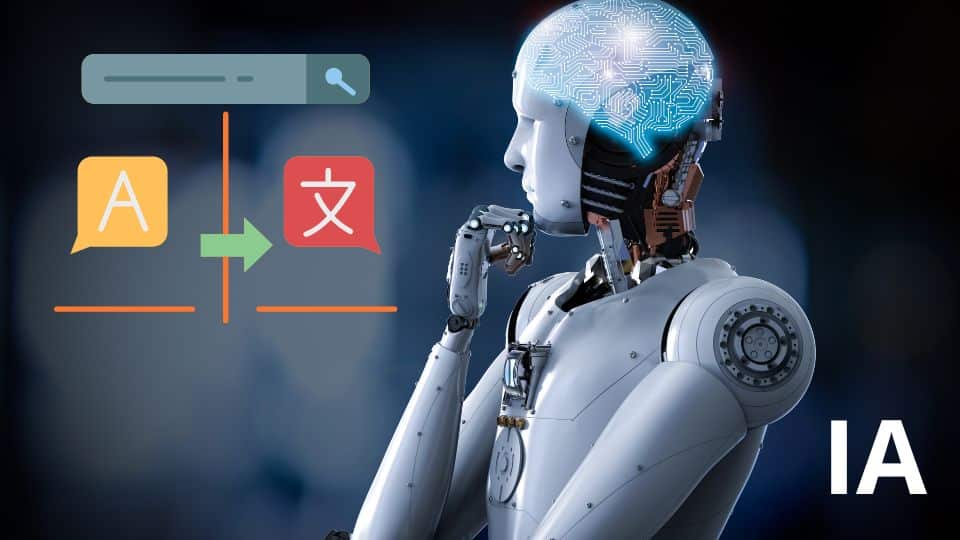
How artificial intelligence is transforming translation

With the level of globalization that exists today, communication is crucial and language barriers can be a strong obstacle. Businesses and individuals increasingly seek  to communicate with other countries or access their content . This has led to an essential need to find an accurate, reliable and, above all, fast translation.

Luckily,  artificial intelligence (AI) and translation  have found a way to come together to advance solutions that meet this need. And, with this, they are revolutionizing translation technology in different industries. Do you want to know some of the most curious tools from different sectors? I’ll tell you here.

Artificial intelligence and translation in different sectors

These are some of the sectors revolutionized by machine translation and AI.

📚 Education and literature

Machine translation based on artificial intelligence is helping to decipher lost languages ​​and  improve educational  and literary resources .

  • Dead language translation : MIT researchers Jiaming Luo and Regina Barzilay have developed a tool that uses artificial intelligence to  decipher and  translate dead languages ​​. They already got it with Ugaritic and the linear B writing system.
  • StorySign : The Huawei company has developed an application that  translates stories into sign language  so that children with hearing problems can learn to read and enjoy literature.

🎮 Video game industry

In the video game sector, artificial intelligence is helping  players communicate with each other  and have access to games that are not available in their native language.

  • Acer’s SigridWave : Acer has developed a real-time automatic translator within the video game. It is powered by artificial intelligence and allows players to communicate with each other, even if they speak different languages. SigridWave uses natural language processing  and is capable of recognizing both video game slang and different accents or dialects.
  • RetroArch Machine Translation:  The creators of the RetroArch video game emulator have implemented an automatic translator that uses AI to  translate old games from Japanese to English . And translations include both audio and text.

It goes without saying that the impact of machine translation is not limited to the world of video games; It will also affect other entertainment industries. For example, to sectors such as betting, role-playing games, sports broadcasts, virtual reality games and  online roulette games , among others. In short, all types of businesses in the entertainment field that will not hesitate to take advantage of the advantages offered by AI-based translation.

🎬 Communication and entertainment

The communication and entertainment sector is also taking advantage of these technologies to  facilitate access to information  in any language.

  • Automatic translation of YouTube subtitles : A few years ago, YouTube implemented automatic subtitles on its videos. However, recently, they have also implemented  automatic translation of these into several languages ​​powered by artificial intelligence .
  • Meta’s No Language Left Behind : Meta has also leveraged artificial intelligence  to boost minority language translation on its social networks , such as Facebook and Instagram. Additionally, they are collaborating with Wikipedia to implement translations on the web.

📌 The limitations of artificial intelligence in translation

As you can see, there are a variety of very useful tools that not only make communication easier, but also make it accessible. However, although translation and artificial intelligence has come a long way in recent years, it  still has clear limitations .

For starters, the algorithms that power machine translation depend on data. And these  are not always available (or they are, but not enough)  to provide accurate translations. Especially in uncommon languages.

On the other hand, we return to the usual problem: artificial intelligence and algorithms  are not always capable of capturing the nuances of a language . This can be clearly seen with the cultural references, the expressions of each region, etc. AI’s inability to recognize these nuances frequently results in  errors in translation . Therefore, we can say that the union of artificial intelligence and translation, although it is progressing, is still far from being perfect.

📌 The future of translation with artificial intelligence

Despite these limitations, it is undeniable that the future of these technologies is promising. In addition to having generated  a positive impact in several sectors , it has also helped break down language barriers and make it easier for everyone to access all types of content.

Likewise, as with other technologies, this one will also  continue to advance, refining its algorithms and expanding its databases . And not only that, since there are more and more tools available to the general public for free.

Translate AI – Translator

Translate AI turns your Mac into a translation device!

Translate AI – Translator, uses artificial intelligence and machine learning for the best translation. It is a very simple yet powerful translation app that will easily translate any voice, text or image into 100+ languages. Forget the fear of language when you travel to a new country. This small but powerful tool will act as your assistant wherever you go, be it a coffee shop, hotel/taxi bookings, grocery shopping, and even small talk with strangers. This new app can ask for directions and read street signs in seconds.

KEY Features –

1) Voice to voice

Choose from any supported language and speak to translate. The app automatically detects the correct language for fast and accurate translation. your voice and translate it to the chosen output language or you can even read it on the screen.

2) Text to text

Enter the word or sentence you want to translate and receive results in your desired language in seconds!

3) History

Keep a record of all the translations you have done. So you don’t have to translate a word over and over again. Save time!

Supported speech-to-speech languages:

Arabic (Egypt), Arabic (Saudi Arabia), Arabic (UAE), Chinese (Cantonese), Chinese (Mandarin), Chinese (Taiwan), Danish, Dutch, English (Australia), English (UK), English (US). (USA), Filipino, Finnish, French (Canada), French (France) German, Greek, Gujarati, Hindi, Hungarian, Indonesian, Italian, Japanese, Korean, Norwegian Bokmål, Polish, Portuguese (Brazil), Portuguese (Portugal), Russian, Slovak, Spanish (Mexico), Spanish (Spain), Spanish (United States), Swedish, Turkish, Ukrainian, Vietnamese

Text-to-text supported languages: Supported over 100 languages

Best English to Gujarati Translate Services

14843 gujarati wedding black white films photography lead image 3

Best English to Gujarati Translate Services

Translate

Translate

 Translate is the  action and effect of translating  (expressing in one  language  something that has been previously expressed or that is written in a different language). The term can refer both to the interpretation given to a  text  or  speech  and to the material work of the translator.This concept has its etymological origin in Latin. Specifically, we can determine that it comes from the word  tradition , which can be defined as the action of guiding from one place to another. And it is made up of three different parts: the prefix  trans -, which is synonymous with  “from one side to the other” ; the verb  ducere , which means  “to guide” ; and the suffix – cion , which is equivalent to  “action” .

For example:  “The Argentine writer Jorge Luis Borges made translations of works by Edgar Allan Poe, Walt Whitman, George Bernard Shaw and other great authors” ,  “The translation of this film is very bad” ,  “The speaker speaks too fast, I think that the translate is not including all its concepts . ”

Types of translation

The types of translate are various. Direct translation is   carried out from a foreign language to the language of the translator (such as the case of Borges translating a text by Poe). Reverse translation ,  on the other hand, takes the form of the translator’s language into a foreign language.

On the other hand, one can speak of literal translation  (when the original text is followed word by word) or  free or literary translation  (the meaning of the original text is respected, although without following the author’s choice of expressions).

However, we cannot ignore that there is another classification of translation. In this case, within it we find categories such as  judicial translation , which is that which takes place in front of a court.

On the other hand, there is  literary translation  which, as its name indicates, is the one whose object is literary works of various kinds, be they stories, poems, theater or novels. All of this without forgetting what is known as  informative translation,  which is responsible for doing the same with all types of texts and documents that aim to make known a matter in question. Nor to the so-called  scientific-technical translation which is what, as its name indicates, refers to texts referring to science, technology, the medical field or engineering, among other fields.

Brief history of translation

Translation is the process by which the meaning of a text in one language, or “source text”, is understood and converted to a new text, in another language, called “translated text”, “target text” or “ target text”. When this process is done orally we call it interpretation.

Interpretation is older than writing. The translation had to wait for the appearance of written literature. It is known that there are partial translations of the  Epic of Gilgamesh  (2000 BC) into Near Eastern languages ​​of the time. As is often the case with ancient history, it is difficult to determine when exactly the translation began.

Brief history of translation

Translation is the process by which the meaning of a text in one language, or “source text”, is understood and converted to a new text, in another language, called “translated text”, “target text” or “ target text”. When this process is done orally we call it interpretation.

Interpretation is older than writing. The translation had to wait for the appearance of written literature. It is known that there are partial translations of the  Epic of Gilgamesh  (2000 BC) into Near Eastern languages ​​of the time. As is often the case with ancient history, it is difficult to determine when exactly the translation began.

It is commonly accepted that the origin of the translation dates back to the time of the  Rosetta Stone . Its discovery, in 1799, determined that translation was already in use at the time of Ptolemy V (196 BC). The Rosetta stone, weighing more than 800 kilos and measuring one meter high, collected information about a decree that exalted the figure of the pharaoh and which was transcribed in three languages ​​of the time: Egyptian hieroglyphs, demotic writing and Greek.

However, there is previous information about the commission that Ptolemy Philadelphus, predecessor of Ptolemy V, gave to 72 scribes knowledgeable in Hebrew and Greek to translate the five books of Moses, already in the 3rd century.
Precisely the religious work was an important impetus for translation activity. And shortly after the Rosetta Stone, texts from the Old Testament were translated into what was called the Septuagint.

The disappearance of Hebrew as the main religious language, and the power of the Greek and Roman cultures, led to the push for translation to maintain religious texts. It would be like this, with the first Greek translations of Old Testament books, and the later translations into Latin by the Romans to the Vetus Latina version.

But surely, The Bible has been the text that has most influenced the growth of translation. Already in the 4th century, the most widespread version was made, which was called  the Vulgate . Made by Saint Jerome, patron saint of translators, and used for centuries in the Christian religion.

Also the expansion of the Arab empire, during the Middle Ages and until the 15th century, promoted translation into different areas of knowledge such as science or philosophy, typical of Greek texts. It was precisely during the Arab reign in the Iberian Peninsula when the mix of cultures and the situation of Spain as an entrance to Europe promoted a golden period for translation.

In the 12th century, still under Arab rule, the Archbishop of Toledo, Raimundo de Sauvetat, founded the  Toledo School of Translators . The institution began working mostly theological texts. But it was with the arrival of Alfonso.

translation

History of English language

English is a Germanic language originating from the  Anglo-Frisian languages  ​​brought to  Britain  by the Roman invaders.

Initially, Old English was a group of several dialects, reflecting the varied origin of the  Anglo-Saxon kingdoms  of  England . One of these dialects, Late West Saxon, at one point came to dominate.

The original Old English language was then influenced by two waves of invasion: the first was from speakers of the Scandinavian branch of the Germanic languages, who conquered and colonized parts of Britain, the second was from the Normans in the 11th century, who spoke Old Norman and developed a variety of English called Anglo-Norman. These two invasions caused English to become mixed to some extent.

Cohabitation with the  Scandinavians , who would have spoken dialects of  Old Norse , led to a significant grammatical simplification and lexical enrichment of the Anglo-Frisian core of English; The subsequent  Norman occupation  led to the grafting of a layer of more elaborate words from the  Romance languages  ​​(derived from  Latin ). This Norman influence on English penetrated through the courts and the government. With the arrival of the Renaissance, Latin and classical Greek supplanted Norman French as the main source of new words.

Gujarati language

Gujarati ( autoglotny : Gujarātī, English: Gujarati) is a language that comes from the state of  Gujarat , in western  India . It is an  Indo-European language , from the  Indo-Aryan family , spoken by about 46 million people around the world, making it the  23rd  most spoken language in the world. Of all of them, approximately 45.5 million reside in India, 250,000 in  Tanzania , 150,000 in  Uganda , 100,000 in  Pakistan  and 50,000 in  Kenya .

Gujarati is the main language of the  state of Gujarat , as well as the adjacent territories of  Daman and Diu  and  Dadra and Nagar Haveli . There are also sizable communities of speakers in the  United States  and the  United Kingdom . In England, two popular areas with Gujarati populations are  Leicester  (Midlands) and  Wembley  (north London). And in the United States, they are especially found in states such as  New Jersey ,  New York ,  California  , and  Texas .

Due to the size of the Gujarati population spread across the world, from Africa, the  Middle East  to  the United Kingdom  and the  United States , some jokingly call them non-resident Gujaratis instead of the official term non-resident Indians. It is one of the 14 official regional languages ​​of India. It was the mother tongue of  Mohandas K. Gandhi , the “father of India”, and  Muhammad Ali Jinnah , the “father of Pakistan”.

GUJARATI TRANSLATION SERVICES FOR YOUR DOCUMENTS AND CERTIFICATES

Gujarati Translation Document Offered

and many more

Sworn and professional translators from Gujarati

Our translation services in Gujarati are provided by professional, certified translators who are native speakers of Gujarati and are fluent in English. Our company has very strict quality standards when it comes to the translators who carry out each and every translation for our clients.

If you need to translate your documents or certificates from Gujarati to English, or from English to Gujarati, we have the solution. If you want to translate into other languages, we can also help you.

E-learning Translation Services

More and more people are choosing e-learning platforms to acquire new knowledge. Berba’s elearning translation services can implement multiple languages ​​on your platform to help you reach even more learners. And by improving the user experience and developing effective programs, you can increase accessibility and completion rates.

Self-training is increasingly popular, and the use of e-learning platforms grows substantially every year. Whether to improve their knowledge, learn a language or specialize professionally, people want to learn at their own pace through digital portals.

At Berba, professional native translators are experienced in a wide range of content specialties and use specialized translation techniques to accurately adapt learning material to different cultures and languages. They offer access to a large team of diverse and ready-to-work translators, allowing you to convert all your portal content on various topics into as many languages ​​as you need. In a digital world without barriers, don’t let language be an obstacle between your platform and new students.

Translation

English–Gujarati Translator

Get a translation fast and free!

First of all, choose which language you want to translate to. Next, type text of up to 160 characters at a time, up to 2,000 per day, and click Translate.

English definitions

We have corpus-based dictionaries for English learners of all levels. They are ideal for anyone preparing for IELTS and Cambridge exams.

The translation service is the transition of a text to another language, in the execution of this process, some person with sufficient knowledge of two languages ​​takes the context and words of a section of the document and places it in the other language or language destination for the understanding of new readers.

Therefore, the translation service is the way in which information is obtained in different languages. For example, you could be looking for a book on a topic and see a great resource in a language you don’t know and the solution would be to translate it.

On the other hand, you can hire translation services to translate your work and reach new readers. In any sense of the word, the understanding of the content knows no limits thanks to the translation service.

There are many different ways to use translation services. If you want something fast, you can go for software. However, hiring a  Translation Agency  to translate your content is ideal and the best option so that you can be sure that you are really going to receive quality work.

The types of translation

There are so many options available to you in various ideal ways to hire translation services, it will all depend on what you need. Here are some categories worth keeping in mind:

General/conversational:  If you want to master the nuances of a new language, you may consider hiring a general translator. You can learn a lot about languages ​​when you work with someone who knows it well.

Books/literature:  We all love reading books, and a language shouldn’t stop you from great reading. Old classics from different parts of the world are in various languages, and new books or literature may be too. Hire someone to translate books to help you reach a broader base of readers around the world.

Sales/Marketing Content:  When reaching new audiences, you should make sure that language barriers are not an issue. For example, you have a business in a place where a large part of the population speaks, if you want to reach the maximum number of clients or audiences, translating into Spanish is profitable.

Contractual/legal:  Contractual and legal translation is very technical. You should never look for software to translate legal jargon. In these cases, the ideal is to hire a professional who knows the law and speaks several languages.

translator

Why is the translation service important?

The importance of  Translation Services  in our daily lives is widely multidimensional. Translation not only paves the way for global interaction but allows nations to forge interactive relationships when it comes to making advancements in technology, politics, etc.

With the growth of the Internet and communications technology, it is relatively easier to reach audiences thousands of miles away simply through effective translation. This in turn has given rise to the need for translation in various fields such as education, mass communication, science and technology, literature, tourism, religion, commerce and business, etc.

Likewise, quality language translation aims to close the communication gap by helping businesses reach a multivariate global audience by speaking in a language their customers can understand and relate to.

Whether you are a traditional business or an online startup, translation services along with the growing online population offer a lucrative market that was not possible 20-30 years ago. That is the reason why people have realized quality translation and its importance in this era of globalization.

But keep in mind that an inaccurate translation can alter the intended message for your business and have negative effects on your operations, especially in a new country. If you are looking to establish yourself in a foreign region or expand your business globally, it is important to identify and partner with a company that can provide you with accurate and valuable language translation services.