What best criteria are you using to determine the relevance of your data?

images

What best criteria are you using to determine the relevance of your data?

relevance of your data

The relevance of your data

The relevance of your data is very important. The importance of relevant data spans all departments. Basing business decisions on data can be the difference between success or failure — for your entire organization.

Just having the metrics isn’t enough. First, the data you’re collecting needs to be relevant to your organization’s goals. It should indisputably report all pertinent information – positive or negative. Then, the metrics collected need to actionable. When reporting insights, your team should be prepared to answer the questions, “Why does that matter?” and “What are we going to do with that information?”.

When you can collect the information then answer those questions, your organization is on its way to reporting relevant data. Here are 7 reasons why that is important:

Surely you have ever asked yourself the following question-What criteria should you take into account when searching and selecting digital resources or content, both for use and for modifying them?

The distinction between relevance and other dimensions of data quality is important because relevance ensures your data is actionable and aligned with business goals. If you use irrelevant data, you’ll generate inaccurate insights, make poor decisions, and damage your company’s reputation.

Relevant, actionable data is your “ace of spades”. But to play that card, you need to first have it in your deck. If your organization wants to make decisions based on facts, having actionable data on-hand empowers you to answer any “why?” questions.

To be crystal clear: The relevance of your data reported correctly is indisputable. Actionable analytics and insights remove the subjectiveness in business. Without the correct reporting in place, all your team has are instincts and opinions being thrown around, taking you in a million different directions. Take the time to set up reporting and present the relevant data. When the numbers are available and understood by everyone in the organization and the data supports your strategy, it becomes difficult (or impossible) for anyone to argue with your approach.

Relevance of your data creates strong strategies

Opinions can turn into great hypotheses, but only with the right reporting in place. And those hypotheses are just the first step in creating a strong strategy. It can look something like this:

“Based on X, I believe Y, which will result in Z.”

Once you have a hypothesis, you can create a strong, measurable strategy and put it to work! The structured criteria of a hypothesis, including data, is your lighthouse while executing the strategy. Compare results to the hypothesis regularly to ensure the campaign is going to plan. If it’s not, make adjustments to reach your numbers. Having the hypothesis, based on relevant data, allows your team to be proactive and achieve more goals. The alternative is being reactive, finding problems that you wish you caught sooner.

 Relevance of your data is necessary for optimization

How can your team optimize anything if you don’t have meaningful data to support making changes? You can’t. A lot of times, people confuse testing with optimizing. Testing is a part of optimizing, but they aren’t synonyms. Testing is measuring to check the quality, performance, or reliability of something. Optimizing takes those measurements a step further. It means to make the best of or most effective use of something. In order to optimize, you first need to test whatever it is you want to optimize (based on a measurable hypothesis, of course). Then, once you get significant results, your team can start optimizing. Consider starting with one of these aspects:

  • Email subject lines
  • Website pages
  • Ad images
  • Form fields
  • Pieces of content

Relevance of your data builds better relationships with customers

Data can build better relationships with customers in a number of ways, but let’s focus on a few major ones for now.

Website personalizations

All customers are unique, so the more personalized the experience, the better. But we know that’s not always feasible. So, start with general personalization. Segment your audiences by location, job title, or referral source. Then, deliver relevant information to that audience segment.

Easy website navigation

Take a peek at your website data. What are visitors searching for most? What are the most common conversions? Where is the information your audience is looking for? You can answer all of these questions using Google Analytics. If there are significant results, it might be time to make some changes on your website so visitors can quickly and easily get what they need.

Email Preferences

How frequently do your customers like being contacted? Then, what day of the week and time of day do they prefer? Recognizing and implementing this is a win-win strategy. Your email metrics improve, and customers see you as a resource of information instead of a bother.

Knowing Customers’ Interests

If a customer has shown you (through data) that they are NOT interested in something, stop [virtually] shoving it in their faces. Even if you worked really hard on that whitepaper, the customer has closed your 3 popups advertising it multiple times. So, stop showing them the darn pop-up!

(Sorry. Kind of.)

The bottom line? It’s the little things that count. Using data you already have to make that extra effort to improve your customers’ experiences with your company can go a long way. It makes their lives a bit easier, validates their opinions, and makes them feel important.

 Relevance of your data quantifies the purpose of your work

The numbers don’t lie. Data can prove that the projects you’re working on are where your limited time is best spent. It can also support what not to work on. Say you spend 20 hours on each webinar your organization hosts, and you put on 2-4 per month thinking they’re driving leads. But once you look at the report, you realize webinars account for 25-50% of your time on the clock and only bring in 2-5% of leads. Turns out, your time might be best spent on a totally different lead generation campaign.

Relevance of your data helps CYA (cover your…)

Our last reason why data is important to your organization is comical, but oh so true! Protect yourself and your work by collecting AND distributing relevant data. It’s important to make the collected information, good and bad, readily available to key stakeholders. Even if they don’t look at it, you did your part to present the analytics. Not only will you cover your, um…backside, but making the analytics easily accessible communicates transparency and can result in more trust or autonomy for future projects.

For guidance on how to set up your reports correctly, check out the Google Data Studio blog. To get the know-how on something more specific, you can read how to report social media ROI as well.

And it is that we have a wide and varied offer of sources, that if we do not filter content applying certain criteria, it will be difficult to achieve veracity, credibility, reliability and of course quality.

Some of these criteria or indicators that are recommended are: authority, content selection, updating, navigability, organization, readability and good online information resources and type of licenses.

Authority:  

Refers to the person responsible for the site, whether it is a person, a group of people, an association, a public institution, an educational institution, etc. This indicator is also used to evaluate resources such as books, magazines or other types of publications. The level of authority of the person in charge of the site accounts for his legitimacy to give his opinion, write or work on a specific area. This indicator allows you to analyze the level of reliability of the information provided on the site or publication.

Content selection : This indicator serves to evaluate whether the selection of content and its treatment are appropriate. This indicator is essential, since it refers to the validity of the contents and information. To contrast this indicator, it is necessary to compare the information provided by a specific site with data from other sources.

Authority

Accuracy – precision – rigor

Update:  The level of update of a site refers to the periodic incorporation of new information; or the modification of existing data, according to theoretical and scientific advances. This indicator allows you to recognize sites that contain updated information, and sites that are still operational.

  • Creation date  –  Update date  –  Current and updated information  –  existence of obsolete links  –  Existence of incorrect links

Navigability:  This indicator is particularly relevant if it is proposed that students navigate a certain site to search for information. The navigability of a web page refers to the ease with which a user can navigate through it. If a web page is clear, simple, and understandable, navigation will be autonomous and fast.

  • Design  –  Elegant, functional and attractive  –  Combination of colors, shapes and images  –  Homogeneity of style and format  –  Design compatible with different browser versions and screen resolutions

Online information sources:  that is, selecting information through: academic search engines, libraries (databases, magazine portals, catalogues), digital books

Know the conditions of use of all types of digital content before using it with students, assessing aspects such as the inclusion of advertising, the collection of information and personal data and the additional applications that are installed to complement that content.

Critically evaluate the suitability and reliability of sources and content.

Types of licenses:  Not everything on the Internet can be used Intellectual property protects any original literary, artistic or scientific creation. More specifically, article 10 of the Intellectual Property Law indicates that works can be books, musical compositions, films, photographs, computer programs… Everything,
including its title, is protected both completely and partially. For example, in a song both the music and the lyrics are protected.

Consider the license, terms of use and possible restrictions on the use of digital content.

Teachers do not need the authorization of the author to use a work in their classes, they only
need to simultaneously comply with the following conditions:

  1. The use of the work must be solely for illustrative purposes of its educational activities.
  2. The name of the author and the source must be cited.
  3. There should not be any type of commercial purpose.
  4. Additionally, teachers may also reproduce a work in their classes, for example they may photocopy and give a copy to their students. This reproduction is allowed as long as the following conditions are met:
    1. The length reproduced is not more than 10% of the total work (a chapter, an article…).
    2. It is only distributed among students for a specific activity.
      It is very important to keep in mind that this intellectual protection exception is limited only to “what happens in class.” With the rise of new technologies, it is common to make the mistake of uploading copyrighted material to a “class blog”; If the blog were open to anyone, it would not be limited only to “what happens in class” and would be in violation of the educational exception in intellectual property.

WHAT LOCATION OR LOCATIONS WOULD BE MOST SUITABLE ACCORDING TO THE RESOURCE?

EVAGD  allows, among other actions, to organize digital educational content and make it available to the educational community, considering it a safe environment as it is hosted on the CEUCD servers.
In its structure, it has different tools that enable the cataloging and sharing of many types of content.

It would be recommended for those resources in which, through their use, the student’s data protection could be compromised: for example, a questionnaire, a forum, or a videoconference.

G Suite Educational  is a package of Google tools and services for educational centers. It would be advisable when the different options for tracking and using the digital resource by the company do not represent a prejudice.

Aula Digital Canaria  is a comprehensive solution to provide the classroom with tools for students’ digital work and to manage class information in real time. It is an application that allows digitalized learning situations of the Brújula20 Program to be made available to students and teachers in public centers in the Canary Islands in an interactive virtual environment, and facilitates greater control and the real possibility
of responding to the individual needs of the students. .

Being customizable and flexible, it is recommended in the courses that are included in said program.

Institutional blogs  (Eco-school blog 2.0 – multisites for the creation of blogs for institutional projects and digital magazines-, EduBlogs -multisites for the creation of blogs for educational centers-, EcoBlogs -multisites for the creation of teachers’ blogs-, AulaBlog – multisites for the creation of classroom blogs (currently in
pilot phase)

It is recommended as a living space for content management, publication of experiences, communication, dynamization and exchange of knowledge information.


Author affiliation

How do you validate the instruments or tools used for data collection?

person ignoring virtual meeting proximity bias.jpegkeepProtocol

How do you validate the instruments or tools used for data collection?


data collection


What is Data Collection?

Data collection is the procedure of collecting, measuring, and analyzing accurate insights for research using standard validated techniques.

Put simply, data collection is the process of gathering information for a specific purpose. It can be used to answer research questions, make informed business decisions, or improve products and services.

To collect data, we must first identify what information we need and how we will collect it. We can also evaluate a hypothesis based on collected data. In most cases, data collection is the primary and most important step for research. The approach to data collection is different for different fields of study, depending on the required information.

Data Collection Methods

There are many ways to collect information when doing research. The data collection methods that the researcher chooses will depend on the research question posed. Some data collection methods include surveys, interviews, tests, physiological evaluations, observations, reviews of existing records, and biological samples. Let’s explore them.

Essentially there are four choices for data collection – in-person interviews, mail, phone, and online. There are pros and cons to each of these modes.

  • In-Person Interviews
    • Pros: In-depth and a high degree of confidence in the data
    • Cons: Time-consuming, expensive, and can be dismissed as anecdotal
  • Mail Surveys
    • Pros: Can reach anyone and everyone – no barrier
    • Cons: Expensive, data collection errors, lag time
  • Phone Surveys
    • Pros: High degree of confidence in the data collected, reach almost anyone
    • Cons: Expensive, cannot self-administer, need to hire an agency
  • Web/Online Surveys
    • Pros: Cheap, can self-administer, very low probability of data errors
    • Cons: Not all your customers might have an email address/be on the internet, customers may be wary of divulging information online.

In-person interviews always are better, but the big drawback is the trap you might fall into if you don’t do them regularly. It is expensive to regularly conduct interviews and not conducting enough interviews might give you false positives. Validating your research is almost as important as designing and conducting it.

We’ve seen many instances where after the research is conducted – if the results do not match up with the “gut-feel” of upper management, it has been dismissed off as anecdotal and a “one-time” phenomenon. To avoid such traps, we strongly recommend that data-collection be done on an “ongoing and regular” basis.

data collection methods 

Define your research question and objectives

Before you start designing your data collection instrument, you need to have a clear and specific research question and objectives. Your research question should guide your choice of data collection method, type of data, sample size, and analysis plan. Your objectives should state what you want to achieve, learn, or test with your data. Having a well-defined research question and objectives will help you avoid collecting irrelevant or redundant data, and focus on the most important aspects of your research topic.

Choose an appropriate data collection method

Depending on your research question and objectives, you may choose one or more data collection methods, such as surveys, questionnaires, interviews, observations, or experiments. Each method has its own advantages and disadvantages, and requires different skills and resources.

For example, surveys and questionnaires are good for collecting quantitative data from a large and diverse population, but they may suffer from low response rates, biased answers, or unclear wording. Interviews and observations are good for collecting qualitative data from a small and specific group, but they may be time-consuming, subjective, or influenced by social desirability. Experiments are good for testing causal relationships between variables, but they may be difficult to control, replicate, or generalize. You should consider the strengths and limitations of each method, and how they fit your research question and objectives.

Ensure validity and reliability of your data collection instrument

Validity and reliability are two key criteria for evaluating the quality of your data collection instrument. Validity reflects how well your instrument measures what it is supposed to measure, while reliability shows how consistent and dependable it is. To ensure validity and reliability, you should consider following some general guidelines. For example, review the literature and use existing instruments or scales that have been tested and validated by other researchers.

Additionally, pilot test your instrument with a small sample of your target population to identify any errors, ambiguities, or misunderstandings in the questions, instructions, or format. Furthermore, use clear, simple, and precise language that avoids jargon or technical terms that may confuse respondents. Additionally, use multiple questions or indicators to measure the same concept or variable and check for consistency and correlation among them.

Moreover, utilize a mix of open-ended and closed-ended questions with a range of response options that cover all possible scenarios and opinions. In addition to this, use randomization, counterbalancing, or blinding techniques to reduce bias or order effects in your instrument.

Finally, use appropriate scales, units, or categories to measure your variables while ensuring that they are consistent across the instrument. Lastly, use standardized procedures or scripts to administer your instrument and train your data collectors or facilitators to follow them accurately and ethically.

Analyze and interpret your data correctly and transparently

After you collect your data, you need to analyze and interpret it according to your research question and objectives, and the type and level of data you have. You may use descriptive or inferential statistics, qualitative or quantitative methods, or a combination of both, depending on your research design and purpose.

You should use appropriate software, tools, or techniques to process, organize, and visualize your data, and check for any errors, outliers, or missing values. You should also report and explain your data analysis and interpretation clearly and transparently, and provide evidence, references, or citations to support your findings and conclusions.

Evaluate and improve your data collection instrument

Finally, you should evaluate and improve your data collection instrument based on your data analysis and interpretation, and the feedback from your respondents, data collectors, or facilitators. You should assess the strengths and weaknesses of your instrument, and identify any gaps, limitations, or challenges that may affect its validity and reliability.

You should also consider the implications, applications, or recommendations of your research findings, and how they can inform or improve your research topic or practice. You should document and share your evaluation and improvement process, and seek peer review or expert advice to enhance the quality and credibility of your instrument.

data collection instrument

Importance of validating a research instrument

Carrying out these steps to validate a research instrument is essential to ensure that the survey is truly reliable. It is important to remember that you must include the validation methods of your instrument when you present the report of the results of your research. 

Performing these steps to validate a research instrument not only strengthens its reliability, but also adds a title of quality and professionalism to your final product.


What would happen to the marketing research industry if there were no people willing to participate and give feedback? Do you know what the level of confidence is in market research in countries like Mexico?

Marketing research requires that people be willing to share information, participate in a survey or questionnaire, or be willing to give the feedback that is requested.

One of the most important points in any research study is the trust of the participants. We know that it is very common for there to be some degree of concern regarding the reliability and how the data you are sharing will be treated.

The  importance of market research  is that it is a guide for your business decisions, providing you with information about your market, competitors, products, marketing and your customers. 

By giving you the ability to make informed decisions,  marketing research  will help you develop a successful marketing strategy. Market research helps reduce risks by allowing you to determine products, prices and promotions from the beginning. It also helps you focus resources where they will be most effective.


What best strategies will you use to minimize response bias in data collection?

Que es la Inteligencia Artificial y por que es importante 885x500 1

What best strategies will you use to minimize response bias in data collection? Data collection Data collection is the process of collecting and analyzing information on relevant variables in a predetermined, methodical way so that one can respond to specific research questions, test hypotheses, and assess results. Data collection is the procedure of collecting, measuring, and analyzing accurate … Read more

Unlocking the Best Power of Hindi and English Translation: Features and Benefits

hindi

Introduction: In the tapestry of India’s linguistic diversity, Hindi and English translation emerge as powerful tools that transcend language barriers, fostering cultural exchange, facilitating global communication, and contributing to the preservation of heritage. This exploration delves into the myriad features and far-reaching benefits of effective translation between Hindi and English. 1. Cultural Exchange and Understanding: … Read more

“Harmony in Language: Exploring the Best Use of Hindi and English Translation”

Language

Introduction: Language is a powerful tool that connects people across cultures and regions. In a diverse country like India, where multiple languages coexist, the seamless integration of Hindi and English translation plays a pivotal role in fostering communication and understanding. This blog delves into the significance and best practices of using Hindi and English translations … Read more

The Crucial Best Function of Hindi and English Translation in a Multilingual Landscape

hindi

Introduction: In a world marked by linguistic diversity, translation emerges as a cornerstone for effective communication and understanding across cultural and linguistic boundaries. Among the myriad languages spoken globally, Hindi and English hold particular significance due to their widespread use and influence. This essay delves into the multifaceted functions of Hindi and English translation, examining … Read more

The Importance of English and Hindi Translation in a Multilingual World

english

Introduction: In a globalized English world where communication knows no borders, the significance of translation cannot be overstated. It plays a pivotal role in bridging linguistic gaps and fostering understanding among diverse cultures. Two languages that hold particular importance in this context are English and Hindi. English, as a global lingua franca, serves as a … Read more

10 Standard Datasets for Best Practicing Applied Machine Learning

Machine Learning datasets

The key to getting good at applied machine learning is practicing on lots of different datasets. This is because each problem is different, requiring subtly different data preparation and modeling methods. In this post, you will discover 10 top standard machine learning datasets that you can use for practice. Standard Datasets Below is a list … Read more

Machine Learning and examples for Best Datasets

Machine Learning Datasets

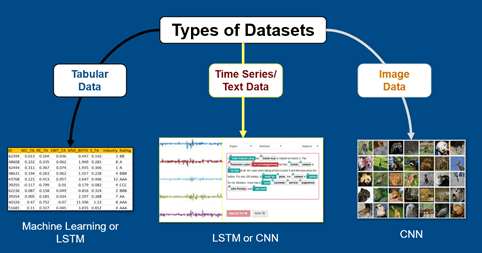
Introduction to Machine Learning Datasets The accompanying article gives a layout to machine learning Datasets. AI dataset is characterized as the assortment of information that is expected to prepare the model and make forecasts. These datasets are named organized and unstructured datasets, where the organized datasets are in plain organization in which the line of the … Read more

Types of dataset in machine learning for Best Quality

Datasets machine learning

There is a lot of dataset in the world. The hardest part is understanding it. How might be taken a dataset from simply existing to being a significant resource? Data should be Findable, Open, Interoperable, and Reusable. Data that integrates FAIR data guidelines will basically influence laid out scientists. We ought to push science ahead … Read more