Best #1 HMONG TRANSLATION Services

XDQE5A

#1 Best Hmong translation Services On the off chance that you require proficient language administrations in Hmong translation, 24x7offshoring.com offers a total arrangement of answers to address the issues of its overall customer base. Local Hmong language specialists work all throughout the planet every minute of every day to convey your activities on schedule and … Read more

Robust and scalable Machine Learning lifecycle

Robust and scalable Machine Learning lifecycle

Robust and scalable Machine Learning lifecycle for a high performing AI team trending in 2024

There is no rejecting that we are all the way into the time of Artificial Intelligence, prodded by algorithmic, and computational advances, the accessibility of the most recent calculations in different programming libraries, cloud innovations, and the longing of organizations to release bits of knowledge from the tremendous measures of undiscovered unstructured information lying in their undertakings.

Machine_Learning_Lifecycle_HeroImage.png

While it is clear where we are made a beeline for there is by all accounts a street blocker that I will address in this blog. Some of the time point of view is a motivation, I as of late discovered an exploration paper by Google specialists, named as Hidden Technical Debt in Machine Learning Systems. It features how little ML code is in the product (Big Picture) and how the enormous parts are regularly ignored(often because of absence of center and capabilities) prompting specialized obligation, insufficiency and frequently dissatisfaction for associations.

Robust and Scalable ML Lifecycle for a High Performing AI Team

Pic Credits: Hidden Technical Debt in Machine Learning (creators)Robust and scalable Machine Learning


Machine learning has revolutionized various industries by enabling computers to learn from data and make predictions or decisions without explicit programming. However, along with its immense potential, machine learning also introduces a concept known as “hidden technical debt.” Hidden technical debt refers to the implicit costs and challenges associated with machine learning projects that may not be immediately apparent. In this article, we explore the concept of hidden technical debt in machine learning and shed light on the challenges it presents.

Data Quality and Preprocessing:
One of the primary sources of hidden technical debt lies in the quality and preprocessing of data. Machine learning models heavily rely on high-quality, well-preprocessed data for accurate predictions. However, data collection processes may introduce biases, incomplete information, or errors that can negatively impact the performance and reliability of the models. Ensuring data quality and implementing robust preprocessing techniques is essential to uncover and address hidden technical debt at the data level.

Model Complexity and Interpretability:
As machine learning models become more sophisticated and complex, interpretability becomes a challenge. Complex models may achieve higher accuracy but lack transparency, making it difficult to understand the reasoning behind their predictions. This lack of interpretability introduces hidden technical debt by potentially hindering model debugging, compliance with regulations, and gaining user trust. Striking a balance between model complexity and interpretability is crucial to mitigate this form of hidden technical debt.

Scalability and Maintenance:
Machine learning models often require continuous updates, enhancements, and retraining as new data becomes available. Scaling and maintaining machine learning systems can be challenging, especially when dealing with large datasets or computationally intensive models. Failure to anticipate scalability and maintenance requirements introduces hidden technical debt by impeding the ability to adapt and maintain the models effectively over time.

Ethical Considerations and Bias:
Hidden technical debt can also arise from ethical considerations and bias in machine learning models. Biases present in training data or algorithmic decision-making can perpetuate unfairness or discrimination, leading to negative consequences in real-world applications. Addressing hidden technical debt related to ethical considerations requires proactive measures such as data auditing, bias detection, and algorithmic fairness techniques.

Reproducibility and Documentation:
Machine learning projects often involve multiple iterations, experiments, and variations in models and parameters. Without proper documentation and reproducibility practices, hidden technical debt can accumulate due to difficulties in reproducing previous results or understanding the rationale behind specific decisions. Establishing robust version control, documentation, and experiment tracking mechanisms is crucial for reducing hidden technical debt associated with reproducibility.

Integration and Deployment:
Integrating machine learning models into existing systems and deploying them in production environments can be complex. Hidden technical debt can accumulate if integration challenges, such as incompatible data formats or infrastructure limitations, are not adequately addressed. Additionally, monitoring model performance, handling version updates, and ensuring seamless deployment across different environments are critical to minimize hidden technical debt during integration and deployment.

Knowledge and Skill Gaps:
Hidden technical debt can also arise from knowledge and skill gaps within machine learning teams. The rapidly evolving nature of machine learning requires continuous learning and upskilling. Failure to stay updated with the latest techniques, algorithms, or best practices can result in outdated models, inefficient workflows, or missed opportunities for improvement. Investing in ongoing training and fostering a culture of knowledge sharing helps mitigate hidden technical debt associated with knowledge and skill gaps.

Hidden technical debt in machine learning represents the challenges and costs that may not be immediately apparent in projects. By addressing these challenges, organizations can minimize the accumulation of hidden technical debt and improve the efficiency, reliability, and ethical implications of machine learning systems. Recognizing the significance of data quality, interpretability, scalability, ethics, reproducibility, integration, and knowledge gaps is crucial for successfully navigating the complexities of machine learning projects and unlocking their full potential.

Normally in the creation frameworks, it so happens that it is ~20% Machine Learning and ~80% is Software Engineering code.

With customary and everyday methods of working, devices and absence of interaction driven programming advancement. It takes a ton of non-ML coding and plumbing to set up a creation prepared framework. https://24x7offshoring.com

As increasingly more machine-learned administrations advance into programming applications, which themselves are essential for business measures, hearty life cycle the executives of these machine-learned models gets basic for guaranteeing the trustworthiness of business measures that depend on them. On top of this, According to Gartner, organizations battle to operationalize AI models:

Robust and scalable Machine Learning lifecycle

“The Gartner Data Science Team Survey of January 2018 tracked down that more than 60% of models created to operationalize them were never really operationalized.

Read more

WHY INDIA IS PREFERRED OUTSOURCING DESTINATION?

WHY INDIA IS PREFERRED OUTSOURCING DESTINATION?

WHY INDIA IS PREFERRED OUTSOURCING DESTINATION?

Independent Cars Data Rectangle When individuals initially find out about the idea of self-sufficient vehicles, immediately, the vast majority of them intuit the framework’s extraordinary dependence on information.

The vehicle should be in steady correspondence with area following satellites, for example, and can send and get messages from different vehicles out and about.

Regardless of whether it’s to discover an objective or turn around a sudden impediment, everybody realizes that self-driving vehicles should be continually hoovering up information from the rest of the world, and regularly taking care of that information to cutting edge neural organization calculations to filter significance from it progressively.

In any case, however astounding as those outward capacities may be, what not many individuals acknowledge is that these vehicles may really accumulate the same amount of information from inside the vehicle as from outside of it. www.24x7offshoring.com

Travelers in the upcoming self-governing vehicles will be dependent upon the engaged consideration of a high-level vehicular AI, and from multiple points of view the quality and wellbeing of their ride will be directed by the vehicle’s capacity to decipher human wishes and needs.

Outsourcing: Purpose, How It Works, Advantages, and Disadvantages | Xometry

Conventional vehicles may run on gas, however self-governing vehicles run on information, and they’ll mine that information from anyplace they can.

Conventional vehicles have long relied on gasoline or other fossil fuels as their primary source of energy. However, the emergence of autonomous vehicles has ushered in a new era where information is the fuel that powers these innovative vehicles. Unlike their traditional counterparts, autonomous vehicles rely on a vast array of data to navigate roads, make decisions, and operate safely. In this article, we explore how autonomous vehicles harness information from various sources and the transformative potential of this data-driven approach.

Autonomous vehicles, also known as self-driving cars, rely on a complex network of sensors, cameras, radar systems, and advanced algorithms to perceive and interpret their surroundings. These vehicles continuously gather data from multiple sources, including:

  1. Onboard Sensors: Autonomous vehicles are equipped with an array of sensors that capture real-time data about the vehicle’s environment. These sensors include LiDAR (Light Detection and Ranging), which uses lasers to measure distances and create detailed 3D maps of the surroundings. Additionally, cameras capture visual information, while radar systems detect objects and measure their distance and speed.
  2. GPS and Mapping Data:
  3. technology provides precise location information, allowing autonomous vehicles to navigate accurately. Combined with mapping data, which includes details about road networks, traffic patterns, and speed limits, autonomous vehicles can plan optimal routes and respond to changing road conditions in real-time.
  4. V2X Communication: Vehicle-to-Everything (V2X) communication enables autonomous vehicles to exchange data with other vehicles, infrastructure, and even pedestrians. This technology facilitates the sharing of critical information, such as traffic conditions, road hazards, and emergency situations, allowing vehicles to make informed decisions and enhance safety.
  5. Big Data Analytics: Autonomous vehicles generate vast amounts of data during their operations. This data, including sensor readings, navigation information, and performance metrics, is collected and analyzed using advanced analytics techniques. Big data analytics help identify patterns, optimize driving behavior, and improve overall system performance.

However, the data ecosystem of autonomous vehicles extends beyond the vehicle itself. These vehicles tap into a wide range of external data sources to enhance their capabilities:

  1. Cloud Connectivity: Autonomous vehicles leverage cloud computing and connectivity to access and exchange data with remote servers. This connectivity enables vehicles to leverage powerful computing resources and access real-time information, such as live traffic updates, weather conditions, and mapping data.
  2. Internet of Things (IoT): The IoT ecosystem, consisting of connected devices and sensors embedded in the environment, provides valuable data to autonomous vehicles. For example, smart traffic lights can communicate with vehicles to optimize traffic flow and reduce congestion, while weather sensors can provide real-time weather updates to enhance driving decisions.
  3. Machine Learning and Artificial Intelligence: Autonomous vehicles rely on machine learning and artificial intelligence algorithms to analyze and make sense of the vast amounts of data they collect. These algorithms continuously learn from the data, enabling vehicles to improve their decision-making capabilities over time.

The abundance of data that autonomous vehicles gather from various sources brings numerous benefits and transformative potential:

  1. Enhanced Safety: The data-driven approach of autonomous vehicles enables them to detect and respond to potential hazards and risky situations. By analyzing data from multiple sensors and external sources, autonomous vehicles can make informed decisions, reducing the risk of accidents and improving overall road safety.
  2. Optimal Efficiency: Autonomous vehicles leverage data to optimize their driving behavior, including speed, acceleration, and route planning. By analyzing traffic patterns, road conditions, and real-time data, these vehicles can minimize fuel consumption, reduce emissions, and optimize transportation efficiency.
  3. Intelligent Mobility: The data-driven nature of autonomous vehicles opens up new possibilities for intelligent mobility services. For example, ride-sharing platforms can leverage data to optimize fleet management, match drivers with passengers efficiently, and provide personalized transportation experiences.
  4. Urban Planning and Infrastructure Optimization: The data collected by autonomous vehicles can provide valuable insights for urban planners and policymakers. This data can help optimize traffic flow, improve infrastructure planning, and create smarter cities that are more responsive to the needs of their residents.

In conclusion, while conventional vehicles rely on gasoline, autonomous vehicles operate on a different fuel—information. By mining data from various sources, including onboard sensors, GPS, V2X communication, and cloud connectivity, autonomous vehicles make data-driven decisions to navigate roads, ensure safety, and optimize driving efficiency. The transformative potential of this data-driven approach extends beyond individual vehicles, shaping the future of transportation, mobility services, and urban planning. As technology advances and data ecosystems evolve, autonomous vehicles will continue to unlock new possibilities and revolutionize the way we travel.

Later on, you will converse with your vehicle

The clearest type of self-ruling vehicles information input is purposeful – voice orders.

This isn’t exactly just about as simple as it would appear, since right now practically the entirety of the discourse acknowledgment calculations requires a cloud association with decipher sound at ongoing paces.

Voice control will at last transform the vehicle into the sans hands robot escort we’ve generally longed for, yet at present it’s simply too crude to even consider working as the essential type of vehicular control.

To satisfy the capability of the independent vehicle, we’ll need to improve either the speed and dependability of versatile information associations, or the speed and cost of incredible locally available vehicular PCs.

Outsourcing

Fortunately, both of those figures are improving rapidly, alongside the productivity of the calculations being referred to.

This implies that soon proprietors of independent vehicles might say “take me home” to their dashboard, and have it recognized their ideal objective, however drive there minus any additional inquiry.

Further developed adaptations could even hear inferred orders, like the certain order to pivot inside the shout, “I failed to remember my wallet!”

www.24x7offshoring.com

With further developed, current discourse acknowledgment, vehicles could even figure out how to comprehend such upheavals through the slur of intoxication, making an evening to remember both more secure and more helpful.

Self-governing vehicles information will be mindful to words, yet activities too

Travelers in self-governing vehicles convey through more than their purposeful voice orders.

In actuality, compulsory correspondence may have similarly as a lot to show a vehicle what a traveler need.

There are extraordinary models, for example, if a traveler loses consciousness and requirements the vehicle to settle all alone to set out toward an emergency clinic, however the utility of a mindful robot vehicle goes a long way past wellbeing.

Adequately mindful programming could distinguish intoxication in a traveler and require self-heading to stay essentially, hence forestalling any driving while affected by inebriating substances — even those that can’t be recognized on a breathalyzer.

A vehicle could possibly see a traveler’s inclination for a marginally more slow, smoother ride to an objective, or it could see from their consistent looking at the time that they would favor a somewhat quicker, more forceful way through traffic.

And keeping in mind that vehicles will “learn” the most about best driving practices from searching externally at the vehicles around it, the responses of travelers inside (say, weariness at a sluggish turn or misery at a quick one) could advise its future conduct, too.

Self-ruling Cars Data – Garage through Pixels WHY INDIA IS PREFERRED OUTSOURCING DESTINATION

Self-driving cars have become a topic of great interest and fascination in recent years. These autonomous vehicles rely on cutting-edge technology, advanced sensors, and vast amounts of data to navigate roads and make informed decisions. In this article, we delve into the role of data in self-driving cars, particularly the data captured through pixels, and its significance in enabling these vehicles to operate safely and autonomously.

Sensor Technology and Pixels:
Self-driving cars are equipped with an array of sensors, including cameras, LiDAR (Light Detection and Ranging), and radar systems. Cameras, in particular, capture visual data in the form of pixels. Pixels are the smallest units that make up a digital image, and they contain vital information about the vehicle’s surroundings, including objects, road markings, and traffic signs.

Visual Perception and Computer Vision:
Pixels captured by the cameras serve as the foundation for visual perception and computer vision systems in self-driving cars. Computer vision algorithms analyze the pixel data to identify objects, detect lanes, recognize traffic signs, and interpret the visual environment. These algorithms leverage machine learning and artificial intelligence techniques to continuously improve their understanding and interpretation of visual data.

Confused about Global outsourcing? This is for you

Object Detection and Recognition:
Through pixel data analysis, self-driving cars can detect and recognize various objects in their surroundings, such as other vehicles, pedestrians, cyclists, and obstacles. By processing pixel-level information, self-driving cars can accurately classify objects and predict their behavior, enabling the vehicle to respond appropriately.

Lane Detection and Mapping:
Pixels captured by cameras play a crucial role in lane detection and mapping. Advanced computer vision algorithms analyze the pixel data to identify lane markings on the road, enabling self-driving cars to navigate and stay within their designated lanes. By continuously monitoring the pixels representing the lane markings, the vehicle can adjust its trajectory and maintain a safe path.

Traffic Sign Recognition:
Another important aspect of self-driving cars’ visual perception is the recognition of traffic signs. By analyzing pixel data, the vehicles can detect and interpret traffic signs, such as speed limits, stop signs, and traffic signals. This information is essential for the vehicle’s decision-making process, ensuring compliance with traffic rules and regulations.

Data-driven Decision Making:
Pixels captured by cameras serve as the primary data source for the decision-making process in self-driving cars. By analyzing the pixel data and combining it with information from other sensors, self-driving cars can make real-time decisions about speed, acceleration, lane changes, and overall vehicle behavior. This data-driven decision-making approach is essential for safe and efficient autonomous driving.

Machine Learning and Training:
The pixel data captured by cameras is also utilized for training machine learning models. These models learn from vast amounts of pixel data to improve object detection, lane detection, and traffic sign recognition capabilities. By continuously training on pixel data, self-driving cars can enhance their perception and decision-making abilities, ultimately improving their overall performance on the road.

data captured through pixels plays a vital role in enabling self-driving cars to operate safely and autonomously. The pixel data serves as the foundation for visual perception, object detection, lane detection, and traffic sign recognition. Through advanced computer vision algorithms and machine learning techniques, self-driving cars analyze pixel data to make informed decisions and navigate roads with precision. As technology advances and algorithms continue to improve, self-driving cars will become even more reliant on pixel data to enhance their capabilities and bring us closer to a future where autonomous driving is a reality.

Self-rule implies arguing, too

A large portion of the correspondence among human and vehicle streams from the human to the vehicle — yet occasionally, the inverse is vital too.

Vehicles will for the most part advise travelers regarding relevant data without requiring a specific reaction, for example if there is a brief pause ahead because of rail vehicles passing.

The objective can be to just keep travelers educated, yet at different occasions the vehicle could think all the more effectively about other human necessities; realizing that a traveler is end route to a supermarket, it could recommend going to a nearer one simply a square from the vehicle’s present area. www.24x7offshoring.com

Outsourcing

“Self-governing” vehicles will likewise at times need to request their travelers for bearing in the face from unrelated things choice focuses; confronted with a traffic reinforcement because of a fallen tree, should the vehicle go around for a speedier course home, or sit tight in line for lower gas utilization?

By posing such inquiries a couple of times, vehicles could develop a social profile for their proprietors, and settle on such choices all the more forcefully later on.

Such a favorable to dynamic information get-together could be similarly as essential to molding a vehicle’s conduct as any volume of driving information from the rest of the world.

Transform a vehicle ride into a short get-away

By both tuning in to a traveler and watching their conduct, vehicles ought to likewise have the option to extraordinarily improve the experience of traveling through traffic by fitting the experience.

Only one out of every odd traveler will need such a methodology, obviously, however those that do could have everything from the degree of outside commotion crossing out to the color of the windows to the point of the seat-back custom-made to their evident degree of stress.

An individual headed home with nothing else on the everyday agenda may get an idea to stop for a treat in transit home, for example.

There are, obviously, still inquiries. It appears to be certain that exclusive vehicles would get their inclinations from their proprietors, however shouldn’t something be said about open vehicles like self-governing cabs?

On the off chance that there are different individuals in a self-driving vehicle, whose requirements ought to spur the vehicle’s activities?

Will it take a type of normal, or a dominant part rule approach?

Various administrators and even makers may wind up with various responses to these inquiries.

Every one of these thoughts require progresses in the information gathering equipment and information filtering programming that permits genuine comprehension of a human inhabitant, however it appears to be that there will be sufficient time for that advancement to occur.

That is on the grounds that none of the most eager applications for self-rule can be considered until self-driving vehicles can drive all over the place, with no human mediation at all.

That immensely significant capacity is as yet a reasonable distance out, implying that for the following quite a while the most imaginative personalities in tech will be laser centered around showing your vehicle how to gain from you.

There’s essentially no telling how far these inside information assortment innovations could progress or how self-sufficient vehicles information will work when they genuinely hit the street.

Free Data Collection Resources

Searching for assets to help with gathering self-ruling vehicle information? Look at these supportive downloads:

The Ultimate Guide to Data Collection (PDF) – Learn how to gather information for arising innovation.

Eye Stare Sample Set (Download) – Get an example of excellent eye stare information.

Street, Car, and People Dataset (Download) – Training a framework that requires street picture information? Download our example dataset.

Need assistance building up a custom dataset? Global me gives custom video and picture information assortment administrations to prepare your self-driving vehicle AI.

Visit with us about energizing your self-sufficient vehicle innovation with excellent datasets.

Read more

Big Data Testing Strategy

Big Data Testing Strategy

Big Data Testing Strategy There are a few zones in Big Data testing strategy is required. There is different kind of testing in Big Data tasks, for example, Database testing, Infrastructure, and Performance Testing, and Functional testing. Huge Data characterized as an enormous volume of information organized or unstructured. Information may exist in any configuration … Read more

Data Warehouse Services and Cloud Analytics

Data Warehouse Services and Cloud Analytics

Data Warehouse Services and Cloud Analytics XenonStack gives Data warehouse Services to Data Infrastructure Modernization, instruments and Workload Migration on Big Query, Snowflake, Azure and AWS Redshift with Fully Managed administrations, 24*7 Data Observability and Data analytics www.24x7offshoring.com Effectively recognize, break down and offload information from a conventional Data Warehouse services to Cloud Data distribution … Read more

Overview of Big Data Security

Big data security

Overview of Big Data Security Data Security!! (Here will know about big data security) It is normal that information volumes will ascend ever higher later on. An examination from IBM anticipated that there would be just about as numerous as 2.72 million information researcher laborers prepared to help organizations adapt to this measure of information, … Read more

Unleash Server Farm Migration

server farm migration

Server Farm Migration

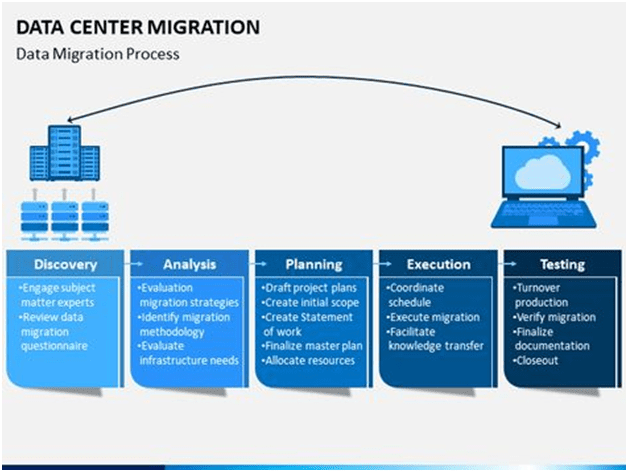
Server farm Migration is the way toward conveying and moving/moving a current server farm starting with one working climate then onto the next without causing information misfortune, this movement cycle requires no actual development and is coherent. Server farms are planned and conveyed to give stockpiling to basic information and a little utilization of the associations.

Server farm migration

Server farm arrangement incorporates conveying a few parts that help the server farm to be secure and open. A portion of these segments are capacity frameworks, switches, firewalls, switches, and workers. It additionally incorporates the organization of utilization conveyance controllers(ADC), which are PC network gadgets in a server farm. www.24x7offshoring.com

Server farm Migration Strategy

    Server farm movement technique should include:

Read more

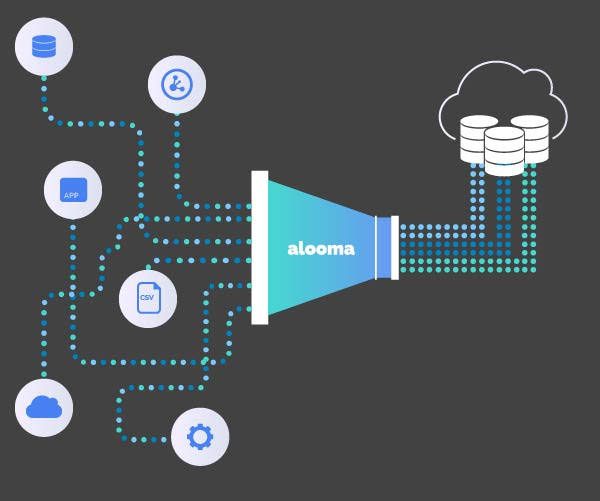
Introduction to Data Ingestion Discover Incredible

offshoring

Introduction to Data Ingestion It is a piece of the 24×7 offshoring Architectural Layer in what parts are decoupled with the goal that insightful abilities may start. It is about information stockpiling and further its investigation, which should be possible utilizing different Tools, Design Patterns, and few Challenges. In the time of the Internet of … Read more